

The Statement
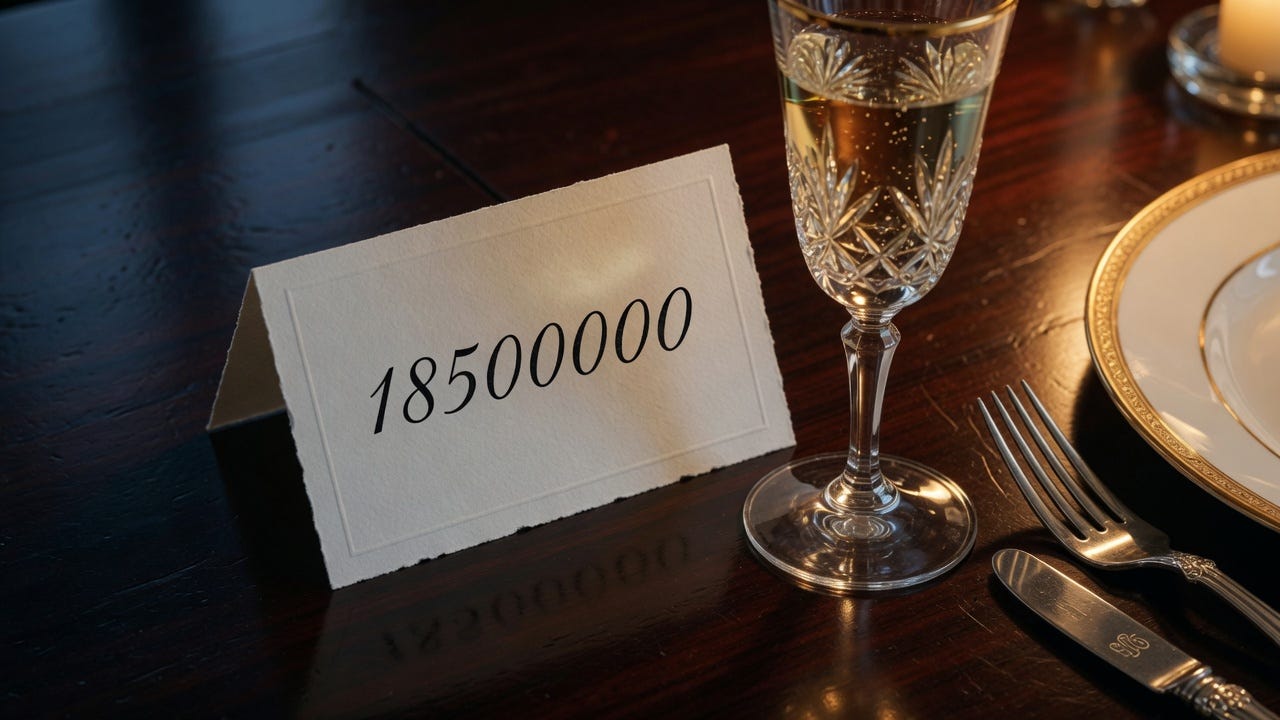
Justin Sun invested $75 million in World Liberty Financial. He was named an “official advisor. “He also attended President Trumps dinner in May 2025 as the single largest $TRUMP memecoin holder, spending $18.5 million to secure the top seat at a table where 220 guests collectively spent $148 million for access to the sitting President. More than half of those 220 guests were foreign nationals.
Today, Sun published a statement about what World Liberty Financial did to him.
He said the project “embedded a backdoor blacklisting function in the smart contract used to deploy WLFI tokens.” He said this function gives the team “unilateral power to freeze, restrict, and effectively confiscate the property rights of any token holder, without notice, without cause, and without recourse.” He said this was never disclosed to him or to any investor.
He called it “a trap door marketed as an open door.”
He said the governance votes used to justify the team’s actions were “not conducted through a fair or transparent process,” that key information was withheld from voters, that meaningful participation was restricted, and that the outcomes were predetermined.
He said the WLFI team has treated the crypto community as “a personal ATM.”
The project’s largest individual investor is publicly accusing World Liberty Financial of embedding hidden controls, rigging governance, and extracting value from users. That is the story as of today.
The Background
World Liberty Financial is the crypto venture co-founded by the Trump family in 2024. Donald Trump serves as chief crypto advocate. His sons Eric, Barron, and Donald Jr. are Web3 Ambassadors. The Trump family entity DT Marks DEFI LLC is entitled to 75% of net proceeds from token sales, with no disclosed capital contribution from the Trump family. The project’s own offering document, the Gold Paper, enshrines that arrangement.
By December 2025, the Trumps had already collected roughly $1 billion in proceeds from the project while still holding approximately $3 billion in unsold tokens.
Justin Sun entered the project in November 2024 with a $30 million token purchase, making him the largest individual investor at the time. He then added $45 million in January 2025. Total: $75 million.
Sun was facing SEC civil fraud charges at the time of his investment, allegations of market manipulation and illegal securities sales. In February 2025, the SEC paused its case against him, citing a desire to explore a resolution. In March 2026, the case settled. Sun’s company Rainberry paid $10 million. All personal charges against Sun were dropped. No admission of wrongdoing.
The sequence is worth stating plainly. Sun invested $75 million in a Trump family project. The SEC paused its fraud case shortly after. The case settled for $10 million. Three House Democrats warned the SEC that closing the case could signal corruption. The SEC closed it anyway.
In return for his investment, World Liberty Financial named Sun an official advisor and purchased $10 million worth of TRX tokens, the native asset of Sun’s TRON blockchain, for its treasury. Both sides were invested in the other’s success.
In September 2025, World Liberty Financial blacklisted Justin Sun’s blockchain address.
The Blacklist
The blacklisting froze 595 million unlocked WLFI tokens in Sun’s wallet. At the time of the freeze, those tokens were worth approximately $107 million. Sun said his wallet had only conducted routine exchange deposit tests involving small amounts. No buying or selling. No market impact.
WLFI gave no public explanation. They did not respond to his requests to reverse the freeze. His statement today makes clear nothing has changed. His tokens are still frozen. At current prices, the position is worth approximately $49 million. He has lost an estimated $70 million.
Axios noted something worth emphasizing when covering the original freeze. The Trump family’s stated reason for entering crypto was their experience of being debanked by traditional financial institutions. They described it as a system that cuts off access to money without due process. They positioned World Liberty Financial as the alternative.
The project the Trumps built to protest debanking froze its biggest investor’s assets without notice, without cause, and without recourse.
Sun’s statement calls that out directly. There is a blacklist function embedded in the smart contract. The team can use it on anyone. He was first. As I covered when ZachXBT exposed Circle’s wallet freeze mechanics, the ability to lock assets on demand is a design feature, not a bug. WLFI appears to have built the same feature into its governance token. Sun’s allegation is that it was never disclosed. If accurate, every WLFI holder is subject to the same mechanism, and none of them know it.
The Loan
While Sun’s frozen tokens were losing value in a wallet he cannot access, the World Liberty Financial team was executing a separate series of transactions.
The project deposited approximately 5 billion WLFI tokens as collateral on Dolomite, a decentralized lending platform. Against that collateral, it borrowed roughly $75 million in stablecoins, including $65.4 million in USD1 and $10.3 million in USDC. Over $40 million of the proceeds were then sent to Coinbase Prime. Arkham Intelligence tracked the full position and flagged that total borrowings across linked wallets reached approximately $150 million.
USD1 is World Liberty Financial’s own stablecoin. The project borrowed its own stablecoin against its own governance token. That is not a standard DeFi operation.
The choice of Dolomite as the lending venue is not incidental. Corey Caplan co-founded Dolomite. Caplan is also a named advisor to World Liberty Financial. WLFI deposited collateral worth $458.9 million into a platform co-founded by its own advisor. That position now represents roughly 55% of Dolomite’s entire total value locked. The USD1 pool was drained in the process. Utilization hit approximately 93%, leaving other depositors unable to withdraw their funds.
WLFI called itself an “anchor borrower” and argued the borrowing generates yield for other users. It did not mention the advisor connection. Sun’s statement today refers to these actions explicitly, calling them illegitimate and unauthorized by any fair governance process.
The Token
WLFI peaked at $0.46 in September 2025. It is now trading around $0.077, a decline of more than 83% from its all-time high.
The team spent $65.58 million buying back 435.3 million WLFI tokens at an average price of $0.1507 over the past six months. At current prices, those buybacks are approximately 49% underwater.
The collateral position creates a structural trap. If the price falls further, the collateral erodes. A liquidation event would force the team to sell WLFI into a thin market to repay the loan, which would push the price lower, which would worsen the collateral position, which would trigger more pressure. The team said it would post more WLFI as collateral to avoid liquidation. Adding more of a falling, illiquid token to back a position denominated in that same token is not a hedge. It is a description of how the loop closes.
The Unlock
75.33% of WLFI’s 100 billion token supply remains locked. Early retail buyers who purchased during the token sale were told the tokens would be non-transferable at launch and could remain locked indefinitely, subject to a governance vote no earlier than 12 months after the sale, with no guaranteed timeline.
That 12 months has passed. Early buyers are threatening legal action.
On April 10, 2026, the same week the Dolomite loan became public and the token hit a new all-time low, World Liberty Financial announced a governance proposal for a phased token unlock. The tranche covers over 16 billion tokens currently valued at approximately $1.28 billion.
The project framed the unlock as “showing up for the people who showed up first.”
Justin Sun showed up first with $75 million. His wallet is frozen. He was not consulted.
Analysts have flagged the timing as a structural stress test. Unlocking 16 billion tokens into a market where the collateral position is already strained, buybacks are underwater, pool utilization is at 93%, and the token has lost more than 83% of its value creates downward pressure from multiple directions simultaneously. The best case is a staged release that market makers can absorb. The worst case is a cascade: new supply, stressed collateral, forced liquidations, and locked depositors unable to exit.

The Governance Problem
Sun’s statement says the governance votes that authorized these actions were predetermined. That the outcomes were decided before the votes were cast.
Consider what we know about governance participation. The proposal establishing the three-tier staking system, which requires $5 million locked in WLFI for six months to purchase “guaranteed direct access” to the project’s team, passed with 99.12% support. The vote was heavily concentrated among a small number of wallets. If governance is controlled by the team and its allies, the votes reflect the will of those who designed them, not the community holding the tokens. Sun is saying that is exactly what happened.
Access to the business development team of a crypto project co-founded by the sitting President of the United States now has a published price. It is $5 million locked for six months. That is not governance. That is a tiered subscription to political proximity.
The Pattern
Sun’s $75 million investment. The SEC fraud case paused. The case settled for $10 million. The advisory role. The $18.5 million dinner seat. The wallet freeze. $70 million lost. That is Sun’s story.
But Sun is not the only data point.
Changpeng Zhao pleaded guilty to Bank Secrecy Act violations for failing to maintain anti-money laundering controls at Binance. He received a presidential pardon. Sheikh Tahnoun bin Zayed Al Nahyan, the UAE’s national security adviser, quietly acquired a 49% stake in World Liberty Financial for $500 million before Trump’s inauguration without public disclosure. That same Sheikh chairs MGX, the Abu Dhabi state-backed investment firm that used $2 billion of USD1, World Liberty Financial’s own stablecoin, to invest in Binance. Senators Warren and Merkley formally requested documents from World Liberty Financial about that deal.
Three BitMEX co-founders and a senior employee pleaded guilty to the same Bank Secrecy Act violations. All four received presidential pardons.
I covered the CZ pardon and the timeline of what preceded it when it happened. I covered the GENIUS Act stablecoin framework, now advancing through Congress with strong administration support. USD1 stands to benefit from that framework more than any other issuer. No other stablecoin issuer has a co-founder in the White House. I have also covered how Tether has avoided every audit that would have required it to prove its reserves. USD1 is playing a related game at a different altitude.
Each piece of this connects to the next. The token, the stablecoin, the lending platform, the advisor, the UAE stake, the pardons, the governance votes, the blacklist function, the unlock.
Justin Sun called it “a trap door marketed as an open door.”
That description is accurate. The trap door was always there. The question is how many people are still standing inside when they find out.
If you want context on the mechanics of stablecoin freezes, I covered Circle’s ability to lock wallets on demand when ZachXBT exposed it. The GENIUS Act stablecoin framework is covered here. The Tether audit question here. The CZ pardon and its timeline here. These stories are part of the same structure.
Strident Citizen is independent and reader funded. No ads. No institutional backing. Every article is free to read. If this kind of investigative journalism matters to you, a paid subscription is the most direct way to keep it going.