

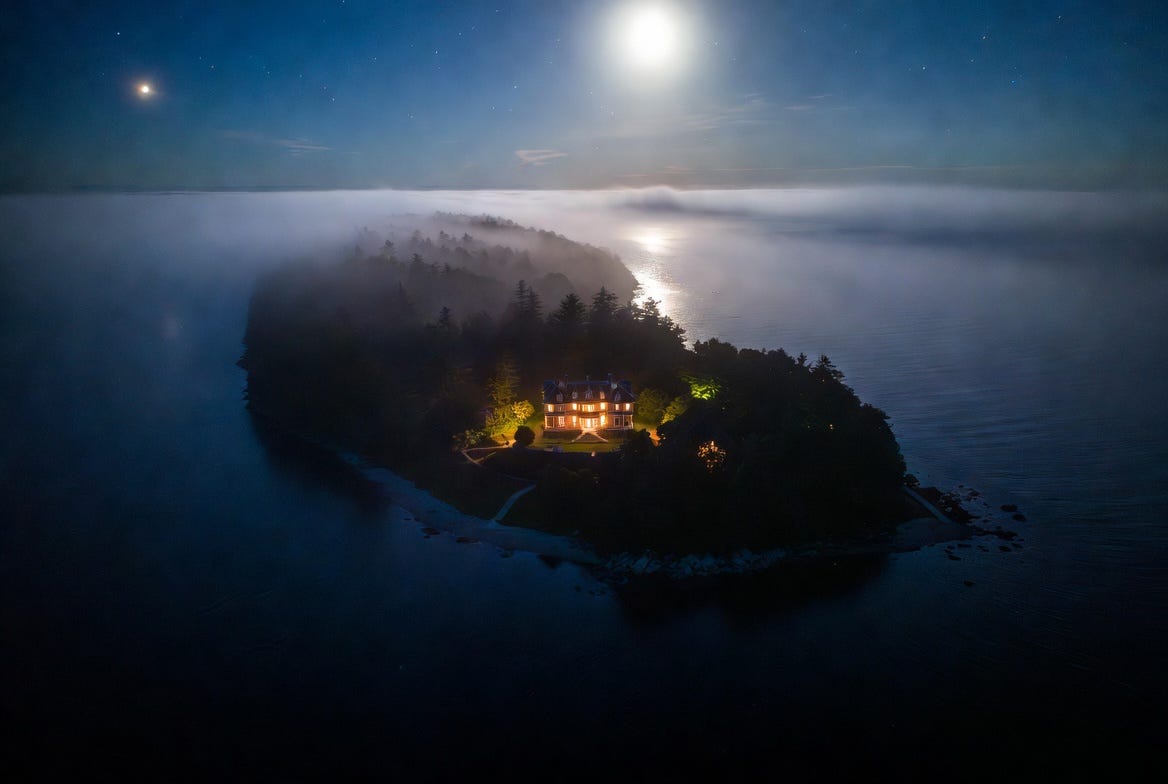
In 1907, the United States did not have a central bank.
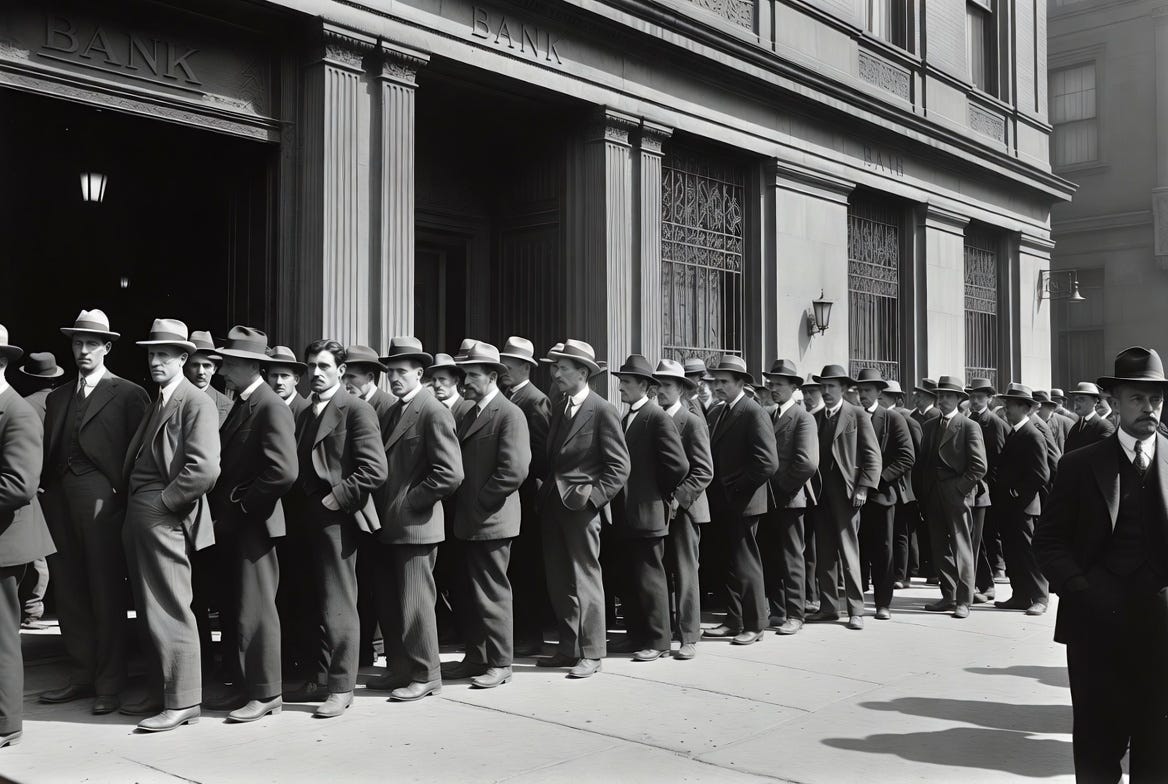
What it had was chaos. Between 1863 and 1907, the country had suffered through four major nationwide banking panics and a series of regional collapses that struck roughly every fifteen years. Banks failed without warning. Credit froze overnight. Businesses shut down. Ordinary Americans lined up outside institutions that could not pay them back. There was no mechanism to stop it. No lender of last resort. No institution capable of stepping in when the system began to fall.
Came across this video recently and could not shake the timeline it lays out. Worth watching before or after reading this. What follows is the documented record.
That absence shaped everything that followed.
A Country Without a Safety Net
The United States had experimented with central banking before. The First Bank of the United States operated from 1791 until 1811. The Second Bank of the United States ran from 1816 until President Andrew Jackson refused to renew its charter in 1836, calling it a corrupt institution serving the interests of the wealthy at the expense of ordinary Americans.
After Jackson killed the Second Bank, the country operated without a central financial authority for over seven decades. What filled that void was a fragmented network of thousands of independent state and national banks, each holding its own reserves, each making its own decisions, and none of them coordinated with the others.
During a crisis, that fragmentation became catastrophic. Banks did not trust each other. They hoarded cash. They refused to extend credit. The reserves that existed across the country became frozen in place, locked in individual bank vaults, unable to move to where they were needed. The result, every fifteen years or so, was collapse.
By 1907 the pressure had been building for years. The stage was set for something to break.
The Man Who Acted Like a Central Bank
John Pierpont Morgan was the most powerful private financier in American history. He had built General Electric, U.S. Steel, and International Harvester. He controlled railroads, banks, and shipping lines across the country. He had reorganized entire industries, earning the term Morganization for his method of consolidating competitors under single ownership and eliminating the chaos of competition. The press called him the Napoleon of Wall Street.
In October 1907, a failed attempt to corner the market on United Copper stock triggered a cascade of bank runs across New York City. Knickerbocker Trust Company, one of the largest in the city, collapsed when it could not meet depositor withdrawals. The panic spread. The stock market lost nearly half its value from the year before. Credit markets seized. Factories cut production. The economy contracted by more than ten percent.
There was no institution to stop it. So Morgan stopped it himself.
He convened the most powerful bankers in America at his private library on East 36th Street. He locked the doors. He refused to let anyone leave until they pledged millions of dollars to stabilize the failing institutions. He personally directed the flow of capital into the institutions worth saving and withheld it from those he deemed insolvent. When the night was over, the panic had been contained.
Observers at the time noted that he had acted like a one-man central bank.
The rescue made him simultaneously the most admired and the most feared man in America. It also made the underlying problem visible to Congress in a way that could no longer be ignored. Why should the stability of the American financial system rest on the judgment of one private citizen? What happened when that citizen was no longer available, or no longer willing?
Congress responded. Senator Nelson Aldrich of Rhode Island, chairman of the Senate Finance Committee and one of the most powerful politicians in the country, established the National Monetary Commission to study the crisis and propose a permanent solution. Aldrich was a Morgan ally. His daughter had married John D. Rockefeller Jr. He was, in the eyes of his critics, the political arm of Wall Street.
The commission traveled to Europe, studied the Bank of England and other central banking systems, and returned with a mandate to produce a plan. The problem was who could write it. Anyone connected to Wall Street would poison the bill politically. The public distrusted concentrated financial power. If it became known that Morgan’s men had written the banking legislation, it would never pass.
They needed to disappear.
The Secret Meeting at Jekyll Island
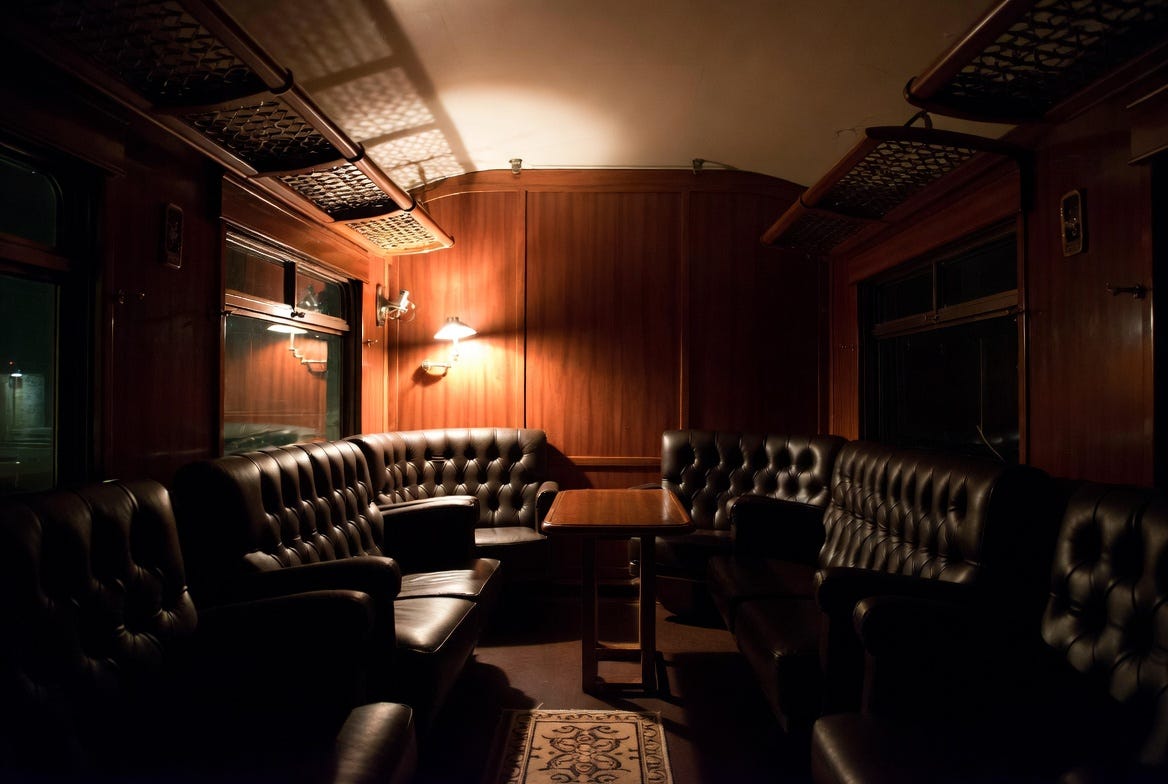
In November 1910, Senator Aldrich organized what he told the press was a duck hunting trip to Jekyll Island, off the coast of Georgia.
It was not a duck hunting trip.
Six men boarded a private rail car in Hoboken, New Jersey. Aldrich had instructed them to arrive separately and to use only first names for the duration of the trip, to prevent the staff from identifying who was on board. One member brought a borrowed shotgun to maintain the ruse. They traveled through the night to Brunswick, Georgia, then crossed by boat to the island.
The Jekyll Island Club was described by Munsey’s Magazine in 1904 as the richest, the most exclusive, the most inaccessible club in the world. Its members included JP Morgan, Marshall Field, and William Kissam Vanderbilt. Their estates on the island were called cottages.
A member of the club, most likely Morgan himself, had arranged for the group to use the facilities.
The six men were Senator Nelson Aldrich; A. Piatt Andrew, Assistant Secretary of the Treasury; Henry Davison, senior partner at JP Morgan and Company; Arthur Shelton, Aldrich’s private secretary; Frank Vanderlip, president of National City Bank of New York; and Paul Warburg of Kuhn, Loeb and Company, a representative of European banking interests. Together they called themselves the First Name Club.
They worked for nine days.
The plan they produced was a blueprint for a central banking system. A network of regional reserve banks that would hold member bank reserves, issue a uniform national currency, and provide liquidity during future crises. The structure was deliberately designed to appear decentralized, spread across the country in regional branches, to avoid the political toxicity of a single Wall Street bank controlling American monetary policy.
The substance was not decentralized. The governance structure gave larger banks more votes. The plan preserved and institutionalized the concentrated financial power that already existed.
Frank Vanderlip wrote in his 1935 Saturday Evening Post article: “I do not feel it is any exaggeration to speak of our secret expedition to Jekyll Island as the occasion of the actual conception of what eventually became the Federal Reserve System. Discovery, we knew, simply must not happen, or else all our time and effort would be wasted.”
The participants denied the meeting had ever occurred for twenty years. They only acknowledged it after Aldrich’s biographer published the account in 1930. By then the Federal Reserve had been operating for seventeen years.
This is the context in which the Titanic sailed. A secret plan had been written. A political strategy to pass it was underway. The men who wrote it needed the opposition cleared, or neutralized, or simply gone.
The Ship
In 1902, JP Morgan founded the International Mercantile Marine Company. It was an attempt to monopolize the transatlantic shipping trade, absorbing major American and British lines into a single trust. White Star Line was acquired that same year as a wholly owned subsidiary. Morgan could not directly own British ships as an American citizen under the laws of the time. He could own the company that owned the company.
White Star Line built the Titanic.
In 1908, Harland and Wolff shipyard in Belfast was authorized to build three Olympic-class ocean liners for White Star Line. The project was funded through Morgan’s conglomerate. Morgan attended the Titanic’s launching in Belfast in 1911. He was planning to be on it.
He booked a private luxury suite for the maiden voyage. It came with a personal promenade deck. His bathtub was fitted with specially designed cigar holders. The booking was not a casual reservation. It reflected what the voyage represented. The Titanic was the most celebrated ship in the world. Sailing on its maiden voyage was a statement.
He did not board.
Morgan cancelled before departure. He told people he was ill and needed rest at a French spa resort in Aix-les-Bains. He was photographed in Europe shortly after, appearing in good health. No confirmed explanation for his cancellation has ever been established by historians, and accounts of his stated reasons have never fully aligned.
Dozens of other prominent passengers cancelled as well, for various stated reasons. Morgan was not the only one. That fact is worth noting alongside the others.
The Men Who Went Down
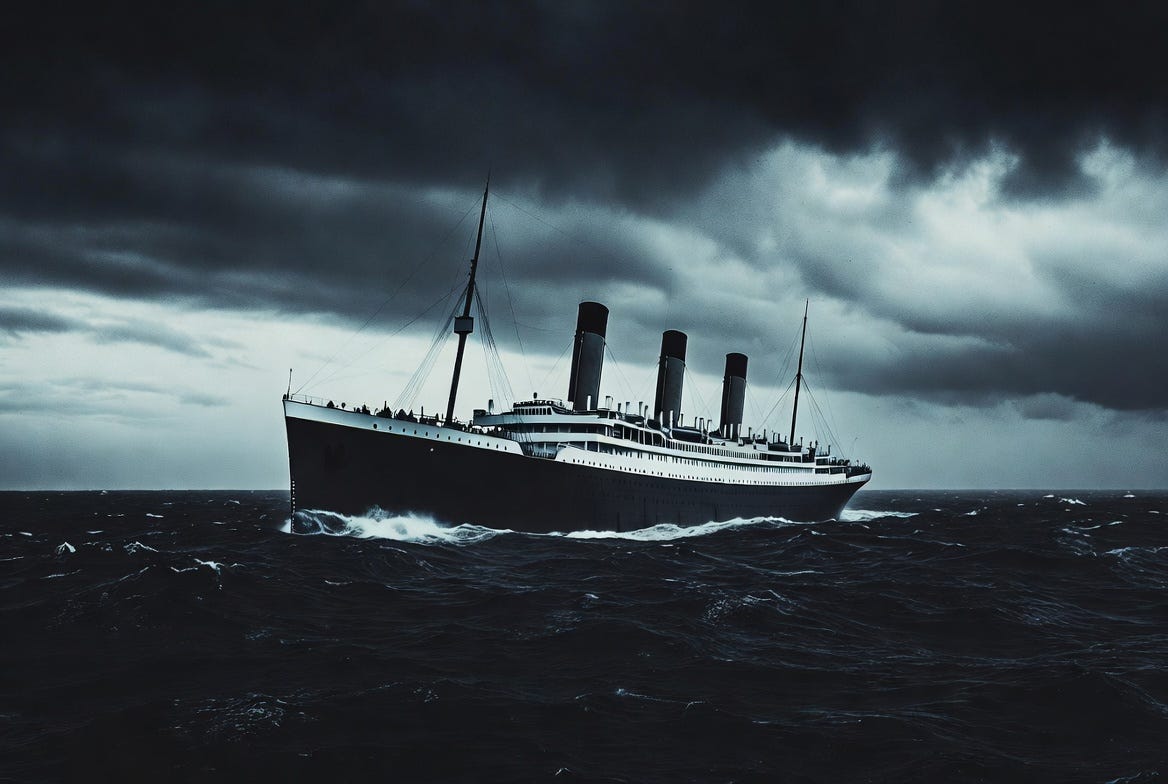
The Titanic’s first-class passenger list in April 1912 included some of the most powerful men in America. The press called it the Millionaire’s Special.
John Jacob Astor IV had a net worth of approximately $87 million at the time of his death, the equivalent of roughly $2.9 billion today. He was considered the richest person in the world. He had built the Waldorf-Astoria Hotel, financed research by Nikola Tesla, and served as a lieutenant colonel during the Spanish-American War. He was 47 years old and traveling with his young pregnant wife Madeleine, returning from their honeymoon in Europe and Egypt.
When the ship began to sink, Astor helped Madeleine into a lifeboat along with her maid and nurse. He asked an officer if he could board with his wife given her condition. He was told he could not. He stepped back. He lit a cigarette. He was last seen standing on the starboard bridge wing as the ship went under. His body was recovered nine days later, identified by the initials on his jacket and a gold pocket watch engraved J.J.A.
Benjamin Guggenheim was a mining and smelting magnate, one of seven children of Meyer Guggenheim, founder of the Guggenheim mining empire. He removed his lifebelt after a steward helped him into it. He changed into formal evening dress. He told a surviving steward to relay a message: “We are dressed in our best and are prepared to go down as gentlemen.” He was not recovered.
Isidor Straus was the co-owner of Macy’s department store and a former United States congressman. He and his wife Ida had been married for 41 years. When crew members offered Straus a place in a lifeboat given his age, he refused while other men remained on board. Ida was offered a seat and refused it. She told the passengers around her she would not leave her husband. They were last seen sitting together in deck chairs on the deck, holding hands. Neither body was recovered.
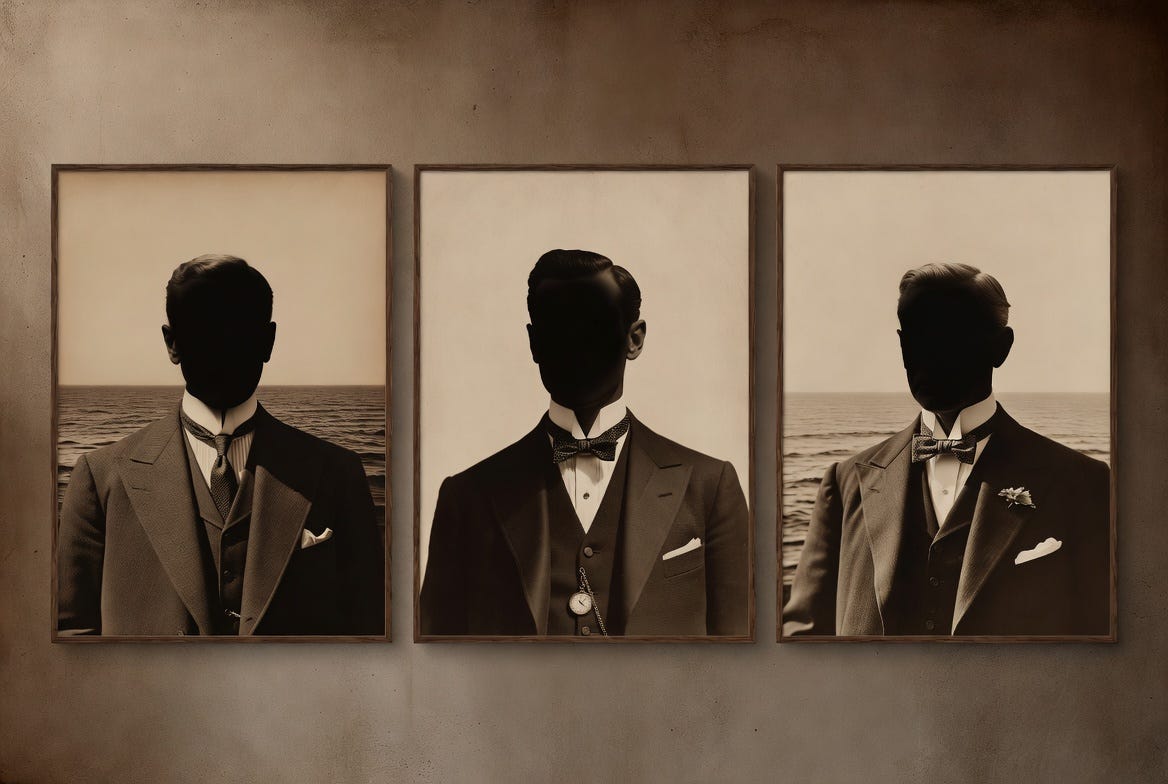
The three wealthiest men on that ship had the kind of wealth and influence that could reshape political outcomes. Whether they intended to use it against the Federal Reserve is unknown. What happened to them is not.
The Act
The Titanic sank on April 15, 1912.
The Federal Reserve Act was signed into law by President Woodrow Wilson on December 23, 1913. Eighteen months separated those two dates.
The Act that passed was, in Frank Vanderlip’s own words, virtually identical to what had been drafted at Jekyll Island. The names on the bill had changed. The public structure had been adjusted to include presidential appointments and a degree of government oversight, concessions made to secure the votes needed for passage. The underlying architecture was the same.
Morgan did not live to see it implemented. He died on March 31, 1913, nine months before the Act passed. He was 75 years old.
The institution he helped design has controlled American monetary policy for over a century. It sets interest rates that determine the cost of every mortgage, every business loan, and every government debt payment in the country. It manages the money supply. It decides who receives liquidity during a crisis and who does not, a power that has not diminished with time, as Circle demonstrated when it froze sixteen operational business wallets based on a faulty civil case request. It has never been audited in full. Neither has Tether, the institution that now holds more U.S. Treasury debt than most sovereign nations. Its founding was kept secret for twenty years by the men who built it.
The questions those facts raise are not new. They have circulated since the timeline became visible to anyone willing to examine it. The pattern of financial infrastructure built in secret and operated without public accountability did not end in 1913. I have written before about who may have built the infrastructure that replaced it. What I am doing here is not advancing a conclusion. I am laying out what is documented and separating it clearly from what is not.
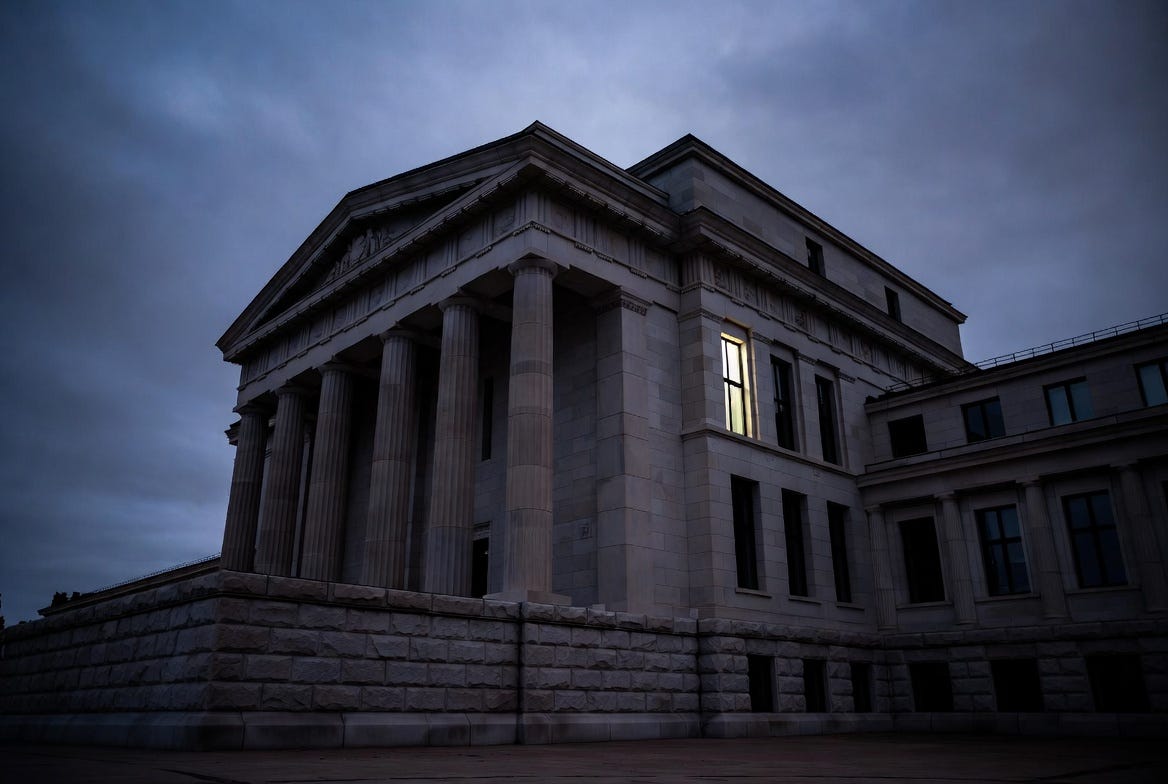
The documented facts are these. The men who designed the Federal Reserve met in secret on a island arranged by JP Morgan. Morgan owned the company that built and owned the Titanic. Morgan booked a suite on it and did not board. Three of the wealthiest men in America died when it sank. The Act passed eighteen months later.
I am not telling you what to conclude. I am telling you the facts. Make of them what you will.
If this raised questions for you, the comment section is open. What part of this timeline do you think deserves more investigation?
If you found this article worth reading, share it with one person who would not expect to find it.
Strident Citizen is independent and reader funded. No ads. No institutional backing. Every article is free to read. If this kind of investigative journalism matters to you, a paid subscription is the most direct way to keep it going.