

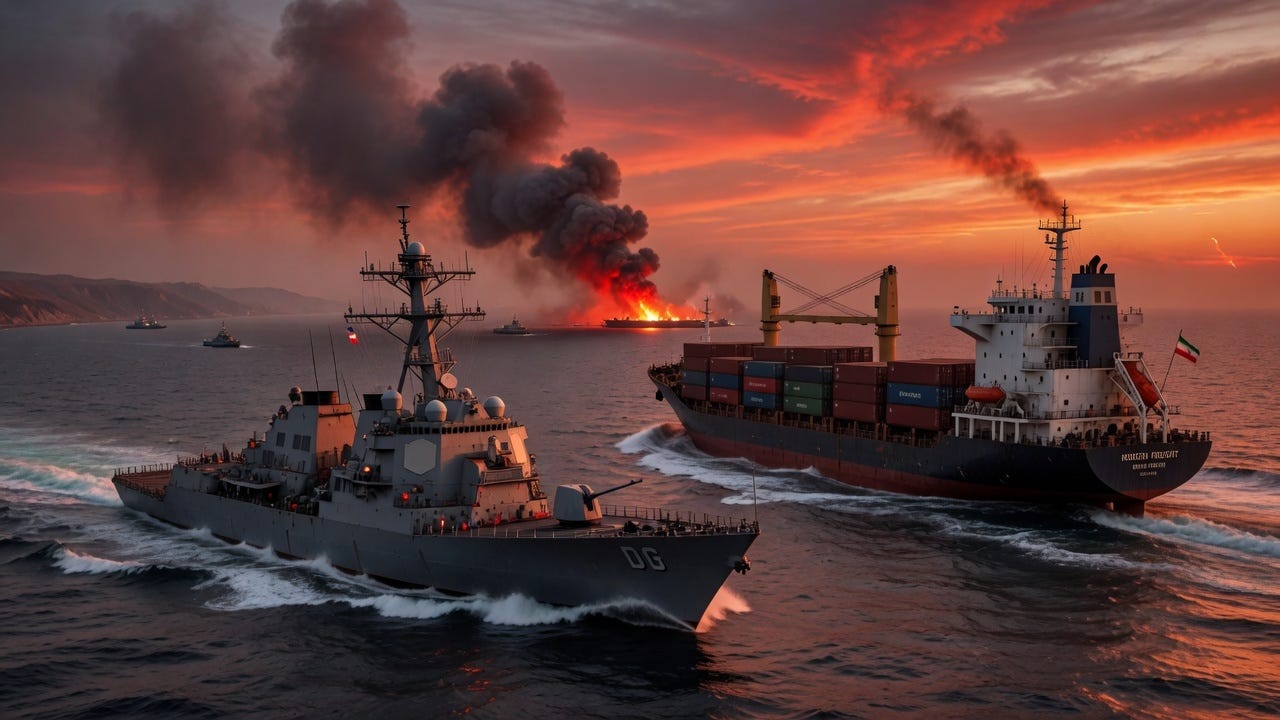
At the same time you are reading this, the US Navy is turning ships around in the Strait of Hormuz.
As of April 14, 2026, US Central Command imposed a full naval blockade. Ten vessels redirected in the first twenty-four hours. The USS Spruance, a guided-missile destroyer, intercepted an Iranian-flagged cargo vessel that attempted to evade the blockade and forced it back toward Iran. China called the move a dangerous and irresponsible act. The IMF cut its global growth forecast the same week, warning of an adverse scenario where oil stays near $100 per barrel.
Most people are watching this as a story about Iran’s nuclear ambitions, or about Trump’s foreign policy, or about escalating conflict in the Middle East.
It is none of those things. Or rather, it is all of those things, but they are not the real story.
The real story is fifty years old. It begins the night the gold standard died and one man figured out how to replace it.
When the Dollar Lost Its Anchor
On August 15, 1971, Nixon went on television and announced the United States was ending the convertibility of the dollar to gold. He called it a temporary measure. The gold window was never reopened.
The Bretton Woods system, built in 1944 when 44 nations met in New Hampshire and agreed to peg their currencies to the dollar and the dollar to gold at $35 per ounce, died overnight. The dollar became a fiat currency backed by nothing except trust and American military power.
The problem was immediate and existential. If the dollar had no anchor, why would the rest of the world keep using it? France had already sent a warship to New York to collect French gold deposits. Switzerland had left the system. Germany had left the system. Other nations were lining up to redeem their dollars for gold that the United States no longer had enough of to cover.
Nixon needed a solution. Henry Kissinger found one.
The Secret Deal That Built the Modern World
In October 1973, Egypt and Syria launched a surprise attack on Israel. Six OPEC nations, led by Saudi Arabia’s King Faisal, declared an oil embargo against the United States and its allies for supporting Israel in what became the Yom Kippur War. Oil prices quadrupled within months. Gas lines stretched for miles across America. Stagflation took hold.
Nixon sent Kissinger to negotiate a ceasefire. The embargo ended in March 1974. But Kissinger had already seen the opportunity inside the crisis.
In July 1974, Treasury Secretary William Simon flew to Saudi Arabia. Simon had previously run the trading desk at Salomon Brothers before becoming Nixon’s energy adviser. He understood bond markets the way Kissinger understood power. The deal they negotiated in Riyadh was kept secret for 42 years, until Bloomberg News filed a Freedom of Information Act request with the National Archives in 2016.
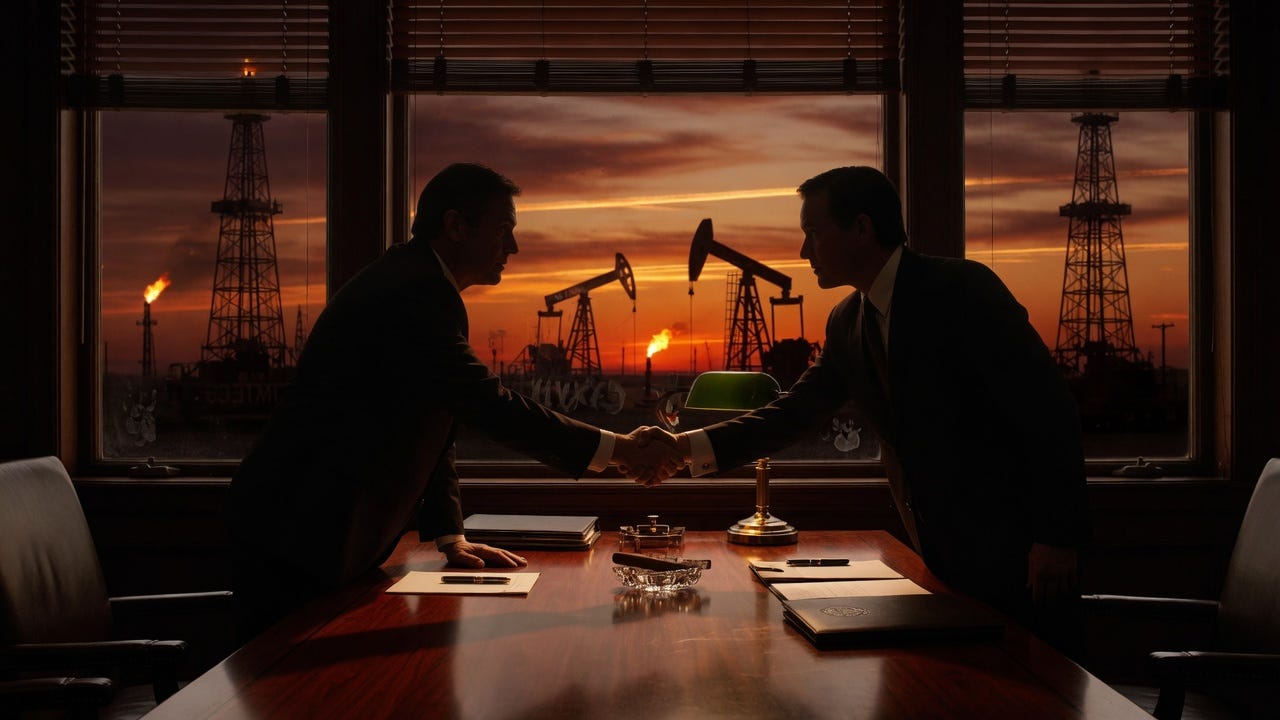
The terms were simple. The United States would provide military protection, advanced weapons, and security guarantees to the House of Saud. In return, Saudi Arabia would price its oil exports in US dollars and recycle its surplus oil revenues into US Treasury bonds. By 1975, every OPEC member had followed suit.
Gold had backed the dollar. Now oil would back it.
It is important to be precise about what this arrangement was and was not. There was no single formal treaty with an expiration date. What existed was a series of diplomatic understandings, the closest thing to a formal agreement being a secret arrangement revealed in 2016, backed by the implicit threat that the United States military would enforce compliance. It was not a contract. It was a relationship built on weapons, money, and necessity.
What the System Actually Did
To understand the power of the petrodollar, you have to understand the mechanics of what happened to the money.
When oil prices spiked, OPEC nations accumulated dollar surpluses faster than their domestic economies could absorb them. Between 1974 and 1981, OPEC nations accumulated a combined current account surplus of $450 billion. The majority flowed back into the American financial system, through US Treasury securities purchased quietly through sovereign wealth funds, through deposits in American and European banks, and through weapons contracts with US defense manufacturers.
For the United States, this created a structural subsidy unlike anything in financial history. Washington could run trade deficits, accumulate debt, and project military power globally without triggering the inflation that would have crushed any other economy. Every nation on earth that needed oil first had to acquire dollars. Global demand for the dollar was guaranteed not by law but by physical necessity.
The costs fell on everyone else. Petrodollars recycled through major international banks were lent at floating rates to developing economies, particularly in Latin America. When Federal Reserve Chairman Paul Volcker raised interest rates sharply in the early 1980s to fight inflation, those floating rate loans became unpayable overnight. The Latin American debt crisis of the 1980s, which destroyed the economies of Brazil, Mexico, Argentina, and others, was a direct downstream consequence of petrodollar recycling. The mechanism that saved the dollar created the conditions for regional financial catastrophe.
If you want to understand the full mechanics of how this system was engineered, this breakdown is worth your time.
The Man Who Built It and the Year He Died
King Faisal bin Abdulaziz Al Saud was the architect of the 1973 oil embargo. He was the first leader in history to turn oil into a weapon against the United States. Time magazine named him Man of the Year. He agreed to the petrodollar arrangement in 1974.
On March 25, 1975, King Faisal was shot at close range by his nephew, Prince Faisal bin Musaid, during a public audience at the royal palace in Riyadh. The king leaned in to kiss his nephew in greeting. The nephew drew a pistol. Oil minister Zaki Yamani was standing beside the king when the gun went off.
The official finding was personal motive. The prince’s brother had been killed by Saudi police in 1966 during a protest against the king’s decision to allow television broadcasting, which the family viewed as un-Islamic. Saudi intelligence conducted a two-month investigation and concluded no foreign government was involved.
There were other theories. Rumors at the time alleged the killing had been directed from Washington as punishment for the oil embargo, with some accounts going as far as naming Kissinger. None of that was ever documented. The Saudi government closed the investigation and the prince was beheaded in June 1975.
What is documented is this. The man who humiliated the United States with the 1973 oil embargo, and then agreed to price oil exclusively in dollars, was dead within twelve months of signing that arrangement.
I am not drawing a conclusion. I am showing you a timeline.
The Pattern
In the fifty years since Kissinger’s deal, a pattern has repeated itself. Leaders who attempted to price oil or sovereign currency outside the dollar system lost power. Without exception.
Saddam Hussein announced in 2000 that Iraq would sell oil in euros under the UN Oil-for-Food program. He converted approximately $10 billion in Iraqi reserves into euros. In 2003, the United States invaded Iraq. After the invasion, Iraqi oil sales returned to dollars.
Economist William Clark documented this sequence in his 2005 book Petrodollar Warfare, arguing the Iraq invasion was not a response to September 11 or weapons of mass destruction but the first currency war in history, a defense of dollar hegemony against the threat of OPEC momentum toward the euro.
Muammar Gaddafi was building something more ambitious. He had accumulated 143 tons of gold and planned to use it to create a pan-African gold-backed currency, the Libyan gold dinar, designed to provide Francophone Africa with an alternative to the French franc. In 2011, NATO forces intervened in Libya’s civil war. Gaddafi was captured and killed. Hillary Clinton’s response, captured on video, was “we came, we saw, he died.”
An April 2011 memo sent to Secretary Clinton by her adviser Sidney Blumenthal explicitly identified Gaddafi’s gold dinar plan as one of the primary reasons France pushed for military intervention. The memo cited knowledgeable intelligence sources and described French President Sarkozy’s motivations in detail, with the gold-backed currency plan listed alongside Libyan oil access. That memo was part of the State Department’s public document disclosure. Clinton’s own inner circle put it in writing.
Every leader who moved oil pricing or sovereign currency outside the dollar system lost power within a few years. Every single one.
I am not telling you why. I am showing you what happened.
Who Actually Owns the System
This is the part that rarely makes it into the mainstream framing of the petrodollar.
The beneficiaries of Treasury recycling, weapons contracts, and dollar dominance are not elected officials. They do not appear on ballots. Macro analyst Simon Dixon, whose framework I would encourage you to read at simondixon.com, identifies the architecture as three interlocking industrial complexes working in coordination: the Financial Industrial Complex, centered on the asset managers who own the Treasury market; the Military Industrial Complex, the defense contractors whose revenue depends on weapons sales and perpetual conflict; and the Technical Industrial Complex, big tech and surveillance infrastructure.
BlackRock, Vanguard, and State Street, the three largest asset managers in the world, hold controlling stakes in virtually every major bank, defense contractor, and media company in the United States. They are the largest shareholders in JPMorgan, Bank of America, Lockheed Martin, Raytheon, and the major television networks. The Federal Reserve is owned by regional reserve banks, which are owned by private commercial banks, which are majority-owned by these three firms. The petrodollar system was not designed to benefit American citizens. It was designed to benefit the institutions that own the Treasury market and the defense contractors paid in petrodollar weapons deals.
Dixon describes this as the Proof of Weapons Network, a structure in which endless debt, military spending, and manufactured conflict sustain the revenue streams of the asset-owning class while the inflation cost falls on everyone else.
That framing is his. The ownership structure is documented fact.
What Replaces It
The petrodollar system is not dead. But it is fracturing in ways that have no precedent since 1974.
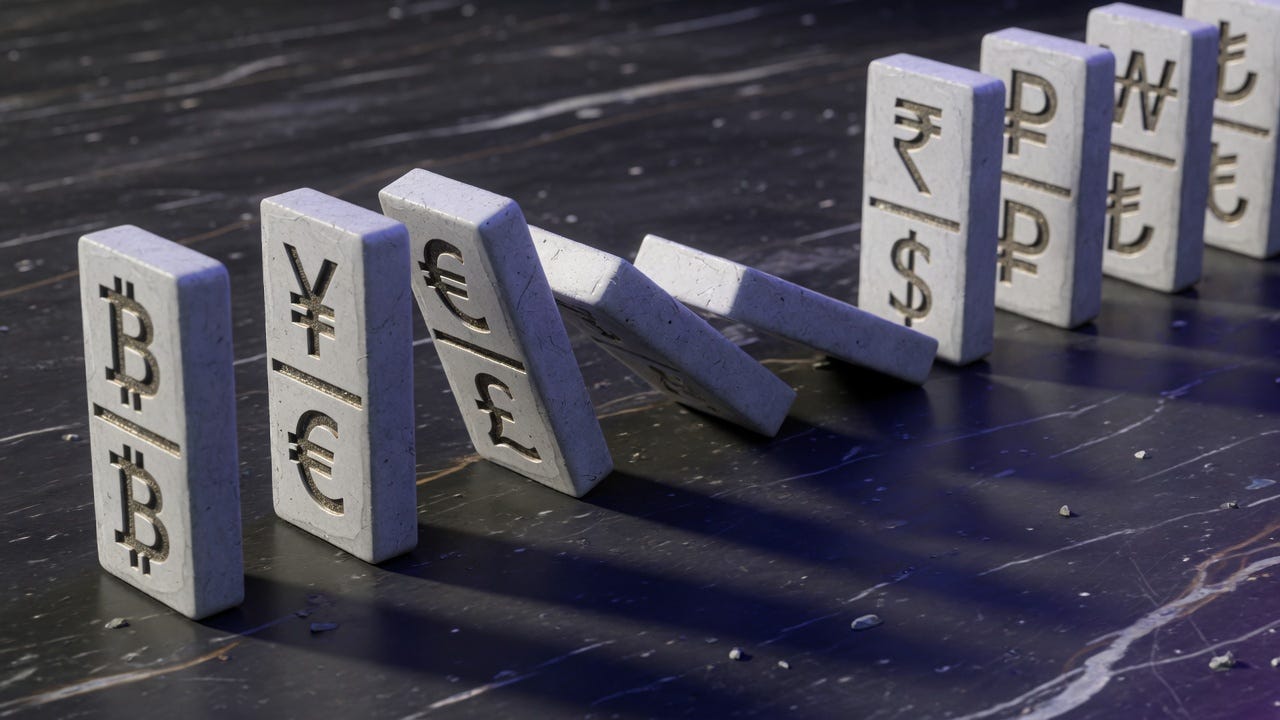
Saudi Arabia has joined BRICS. It has signed onto mBridge, a digital currency platform developed by BRICS central banks as an alternative to SWIFT. The dollar’s share of global reserves has fallen from 71 percent in 1999 to roughly 58 percent today. Saudi Arabia has signaled openness to accepting yuan, euros, and digital currencies for oil transactions.
The United States is not sitting still. On March 6, 2025, Trump signed an executive order establishing a Strategic Bitcoin Reserve, using approximately 200,000 Bitcoin seized by federal law enforcement. His administration is simultaneously advancing the GENIUS Act through Congress, which would formally regulate dollar-backed stablecoins. As I covered in my analysis of the GENIUS Act, stablecoins are not a crypto innovation story. They are a dollar dominance story. Every person on earth who wants to participate in digital finance first has to acquire a dollar-denominated instrument. That is the petrodollar mechanism rebuilt on blockchain rails.
Tether, the largest dollar-denominated stablecoin, now moves more daily transaction volume than Bitcoin and holds more US Treasury bills than Germany. It has 550 million users and has never completed a full independent audit. It is extending dollar reach into every corner of the global crypto economy, without a Congressional vote, without a central bank, and without the oversight that comes with traditional financial infrastructure.
The CIA and Bitcoin article I published earlier explores a related question. If you are building a system to survive the death of the petrodollar, what does it look like? And who would build it first?
Russia has its own answer. I covered the A7A5 Russian stablecoin as a direct attempt to build a dollar-independent transaction system. Iran, cut off from dollar systems entirely through sanctions, has been forced into crypto as a workaround, which I wrote about in my Bitcoin and Iran piece. These are not isolated experiments. They are the architecture of a post-petrodollar world being built in parallel to the existing one.
Trump has responded with tariff threats against any BRICS nation attempting to create a reserve currency to replace the dollar. The military enforcement mechanism of the petrodollar has been partially replaced by tariff enforcement and stablecoin dominance. The instrument changes. The imperative does not.
The Strait of Hormuz
Roughly 20 percent of global oil flows through the Strait of Hormuz. The US Navy’s presence there has been the physical guarantee behind the petrodollar since 1974. It is the gun behind the deal.
The Islamabad negotiations between the United States and Iran collapsed on April 12. A two-week ceasefire is in effect but fragile. The blockade Dixon described as a bounded escalation, a managed transition rather than genuine war, is visible in the numbers: Brent Crude has not broken $100. Treasury yields have not collapsed. Markets are volatile but not panicking. The system is under stress, not in crisis.
That may change.
President Nixon closed the gold window in 1971. Kissinger replaced gold with oil in 1974 and enforced that arrangement with weapons, with Treasury access, and with the promise that the US Navy would always be present at the chokepoints that mattered.
For fifty years, every nation that needed oil had to first acquire dollars. Every surplus recycled into American debt. Every defection was punished.
The USS Spruance is turning ships around in the Strait of Hormuz right now.
What you are watching is that system defending itself.
The question is what comes after it, and who is building it already.
Strident Citizen is independent and reader funded. No ads. No institutional backing. Every article is free to read. If this kind of investigative journalism matters to you, a paid subscription is the most direct way to keep it going.