

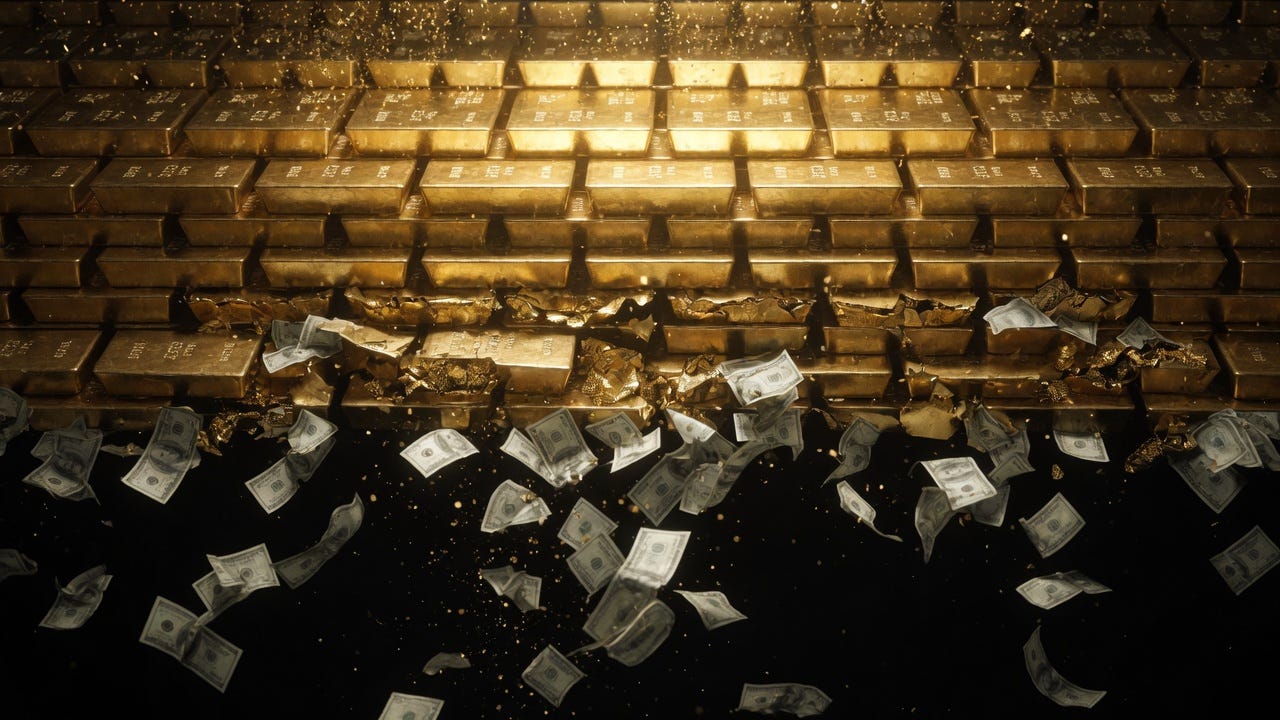
In July 1944, representatives from 44 nations got together at a mountain hotel in New Hampshire and redesigned the entire global monetary system. They did not ask for permission. The United States held two-thirds of the world’s gold. The Americans wrote the rules.
In August 1971, the Americans decided those rules no longer served them. They dismantled the system over a single weekend at Camp David. No allies were warned. No international vote was held. Nixon went on television and it was done.
The same process is underway right now. Different names. Same logic. Same country. Understanding what happened in 1944 and 1971 is not a history lesson. It is the only way to read what is happening today.
The Deal That Rewired the World
The Bretton Woods Conference ran from July 1 to July 22, 1944. Seven hundred and thirty delegates from 44 Allied nations convened at the Mount Washington Hotel, a building that had been closed since 1942 and hastily repainted for the occasion. The hotel had fallen into disrepair during the war. Government workers were sent to patch walls and make beds. The repairs were cosmetic. So, in some ways, was the conference itself.
The outcome had been decided before the delegates arrived. The United States held two-thirds of the world’s monetary gold. America was the creditor to every nation that had fought the war. The dollar was the only currency with the credibility to anchor a new global system. Every other delegation knew this walking in the door.
Two men dominated the proceedings. John Maynard Keynes represented Britain, a country that had spent six years going broke to win a war. He proposed a neutral supranational currency called the bancor, issued by a new institution called the International Clearing Union. Under his plan, both surplus and deficit nations would be penalized for imbalances. No single country’s currency would sit at the center.
Harry Dexter White represented the United States. He had no interest in neutrality. White killed the bancor and placed the dollar at the center of everything. Deficit countries bore the burden of adjustment. Surplus countries, meaning America, could accumulate without limit.
Keynes called the conference “the most monstrous monkey-house assembled for years.” He lost. The final text enshrined the dollar as the world’s reserve currency, convertible to gold at a fixed rate of $35 per ounce. Every other currency pegged to the dollar. It was not a negotiation so much as a coronation.
One other detail worth noting. Harry Dexter White, the man who built dollar dominance, was later identified through declassified NSA intercepts from the VENONA project as a Soviet intelligence source code-named “Jurist.” He testified before the House Un-American Activities Committee in August 1948 and denied it. He died of a heart attack three days later. The system he built, a fundamental institution of liberal Western capitalism, outlasted both him and the Soviet Union.
The Flaw They Built In
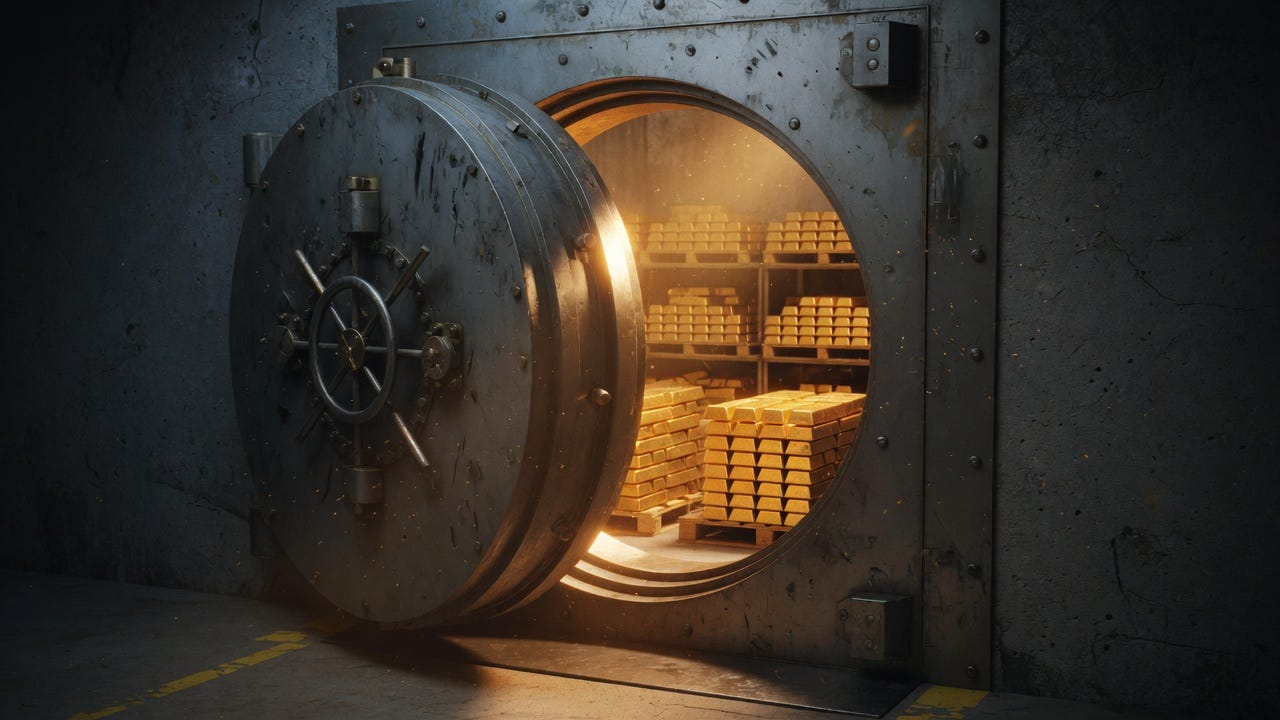
Belgian economist Robert Triffin identified the fatal flaw in 1960. He testified before Congress. His prediction was precise.
For the world to have enough dollars to conduct trade and hold as foreign exchange reserves, the United States had to run persistent trade deficits, exporting more dollars than it earned. But the more dollars it issued, the less credible the gold conversion promise became. The system required America to undermine itself to function.
By the mid-1960s, the numbers were telling the story. The Vietnam War and Lyndon Johnson’s Great Society programs had flooded the world with dollars the Treasury could not back with metal. By 1966, non-US central banks held $14 billion in US dollars while the United States had only $13.2 billion in gold reserves, of which only $3.2 billion was available to cover foreign holdings. The system was already technically insolvent.
France understood this before anyone else would say it aloud. President Charles de Gaulle had been publicly calling the dollar’s reserve status an “exorbitant privilege” since 1965, a phrase coined by his finance minister Valéry Giscard d’Estaing. As economist Barry Eichengreen later put it, it costs only a few cents to produce a $100 bill. Other countries had to produce $100 worth of actual goods to obtain one.
De Gaulle acted on it. He began systematically repatriating France’s gold from the vaults of the Federal Reserve in New York, sending the French Navy across the Atlantic to collect it. Other nations watched. The confidence that had sustained the system began to crack.
By 1971, US gold reserves had fallen by more than half from their wartime peak. Dollar liabilities to foreign governments exceeded gold reserves by four to one. The vault was not just running low. It was structurally unable to honor the commitments the United States had made.
France Calls the Bluff
His successor Georges Pompidou continued de Gaulle’s pressure. In August 1971, as the crisis reached its breaking point, Pompidou sent a naval ship to New York Harbor with instructions to collect French gold deposits. He was not alone.
West Germany had already left the Bretton Woods system in May 1971. Switzerland left in August. On August 11, Britain requested that $3 billion in gold be moved from Fort Knox to the Federal Reserve in New York. Paul Volcker, then Treasury Undersecretary for International Monetary Affairs, later described the moment: if the British were going to take gold for their dollars, the game was over.
The system had one weakness. Everything depended on the United States honoring the conversion promise. Once it became clear the United States could not or would not, the architecture had no foundation.
The Weekend They Changed Everything
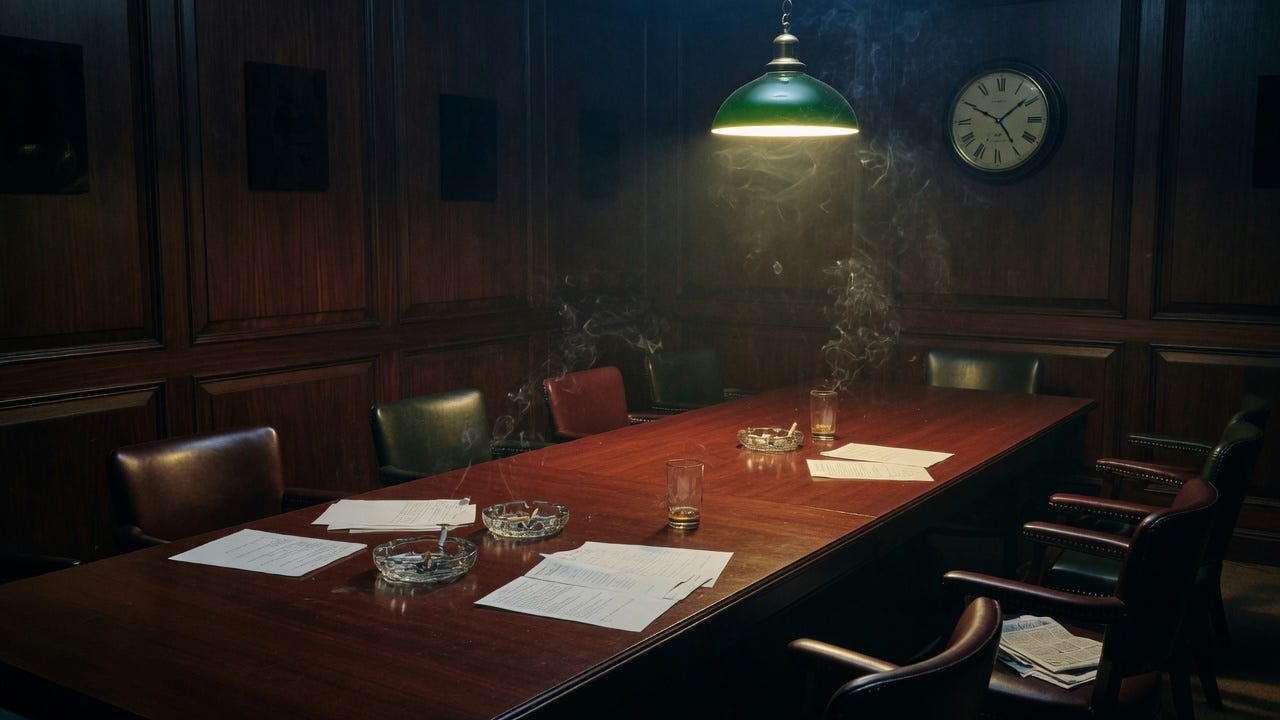
I came across this video recently and found it captured what happened at Camp David that August better than most academic accounts manage. The short version: fifteen advisers, three days, and a decision that changed the price of everything you own.
This was not the first time American financial architects made history in a secluded location with no press present. The secret meeting at Jekyll Island in 1910, where the blueprint for the Federal Reserve was written, followed the same template. Exclusive. Secret. Predetermined. The pattern runs deep.
On the afternoon of Friday August 13, 1971, Nixon gathered his fifteen senior advisers at the presidential retreat at Camp David. Federal Reserve Chairman Arthur Burns. Treasury Secretary John Connally. Undersecretary Paul Volcker. Twelve others. No press was present. No foreign governments were consulted. No warning was given to allies.
Burns and Volcker were worried about how foreign officials would react. Connally was not. His position was that closing the gold window would force surplus countries to revalue their currencies. The United States would use the shock as leverage. It was not a defensive retreat. It was an offensive move framed as one.
The decision was made over three days. On the evening of August 15, Nixon addressed the nation on live television.
The gold window was closed. Foreign governments could no longer exchange their dollars for gold. The anchor of the entire Bretton Woods system, gone in a single presidential sentence. Nixon called the suspension temporary. It was never reversed.
The Smithsonian Agreement in December 1971 attempted to restore fixed exchange rates. Nixon called it “the most significant monetary agreement in the history of the world.” It lasted fifteen months. By March 1973, currencies were floating freely. Bretton Woods was dead.
Paul Volcker’s later summary of what followed remains the most honest description of the system that replaced it: nobody’s in charge.
What Replaced It

The dollar survived 1971 because Henry Kissinger replaced gold with oil.
By 1974, the United States had negotiated an arrangement with Saudi Arabia. Oil would be priced exclusively in dollars. Saudi petrodollar surpluses would be recycled into US Treasury bonds. In exchange, the United States provided military protection and security guarantees for the House of Saud. The deal was classified. The documents were not released until 2016.
Every country on earth that needed oil had to first acquire dollars. The world became a captive customer for the US currency, not because of any international agreement, but because of petroleum and American military power. I covered this arrangement in full in a [previous investigation into the petrodollar system]([petrodollar slug — CONFIRM MANUALLY before publishing]).
The structural problem did not disappear. It migrated. Instead of too many dollars relative to gold, the world accumulated too much dollar-denominated debt relative to anything real. The 2008 financial crisis made this visible. The weaponization of the dollar system after Russia’s 2022 invasion of Ukraine, when the United States froze Russian foreign reserves held in Western institutions, made countries rethink holding dollars at all.
The bluff is being called again. And this time the United States is not waiting for a warship in the harbor. It is rewriting the rules before the crisis forces it to.
They Are Doing It Again
The Trump administration is openly attempting to restructure the global monetary system. The document at the center of this effort is a paper by Stephen Miran, Chair of the Council of Economic Advisers, titled “A User’s Guide to Restructuring the Global Trading System.” Miran coined the term “Mar-a-Lago Accord.”
The thesis: the dollar is structurally overvalued because global demand for US Treasuries as reserve assets props up the dollar far above its trade equilibrium value. This overvaluation hollows out American manufacturing. The solution is to weaken the dollar through tariffs and coordinated currency agreements, forcing trading partners to revalue their currencies upward.
Treasury Secretary Scott Bessent has said publicly that he wants to be part of a “Bretton Woods realignment.” The dollar is already down approximately 10 percent in 2025, its worst first-half performance since 1986, the year after the Plaza Accord when the US last coordinated a deliberate dollar devaluation.
The parallel to 1971 is not perfect. Nixon acted unilaterally and without warning. The Mar-a-Lago Accord, as conceived, would be a negotiated multilateral agreement. But the underlying logic is identical. The existing monetary architecture has stopped serving American interests. The United States intends to change it. The rest of the world will adjust.
There is a contradiction at the center of the current effort that mirrors the contradiction at the center of Bretton Woods itself. Trump has simultaneously threatened tariffs against any country that moves away from dollar dominance, while his economic team works to weaken the dollar. Miran acknowledges this tension in his own paper without resolving it. Keynes would have recognized the problem. He identified it in 1944. The Americans were not interested then either.
The Digital Layer
There is a dimension to this rewrite that did not exist in 1944 or 1971. The United States is now embedding dollar dominance into the cryptocurrency infrastructure layer, and doing it through legislation.
The GENIUS Act requires stablecoin issuers to hold US Treasury securities as reserves. Every dollar-denominated stablecoin in circulation creates direct demand for US government debt. Tether, the largest stablecoin issuer, already holds more US Treasuries than many sovereign nations. Circle holds the rest in short-term government paper.
These stablecoins are also freezable. The GENIUS Act does not change this. What the GENIUS Act does is codify the infrastructure through which the dollar maintains its reserve status in the digital economy, the same way the Bretton Woods agreement codified it in the postwar economy.
The Trump family’s own stablecoin, USD1, issued by World Liberty Financial, sits inside this structure. The CZ pardon, the Binance deal, the Abu Dhabi sovereign wealth involvement, all of it circles the same question: who controls the dollar layer of the digital economy? The answer increasingly looks like the same people who controlled the dollar layer of the physical economy after 1944.
Keynes proposed a neutral currency in 1944. He lost because the United States held the gold and had no interest in neutrality. Bitcoin is the closest thing to his bancor that has ever been built: issued by no government, requiring no nation to run deficits to supply it, freezable by no one. I wrote about the CIA’s documented relationship with early Bitcoin development and what that history implies about who understood this earliest. Whether Bitcoin becomes a genuine reserve base layer is uncertain. That it offers a coherent structural alternative to the current non-system is documented.
The deal that was made in 1944 was never as permanent as it appeared. The deal made in 1971 was never as temporary as president Nixon claimed. The deal being made right now will follow the same pattern. The only question is which country is writing the next set of rules, and whether, for the first time in 80 years, the answer might not be a country at all.
Strident Citizen is independent and reader funded. No ads. No institutional backing. Every article is free to read. If this kind of investigative journalism matters to you, a paid subscription is the most direct way to keep it going.
If you found this useful, share it with one person who follows monetary policy or crypto. This is the kind of context that gets buried.
Subscribe for the next investigation.
What do you think comes after the Mar-a-Lago Accord? A weaker dollar that holds reserve status, a Bitcoin standard, or something else entirely? Leave it in the comments.