

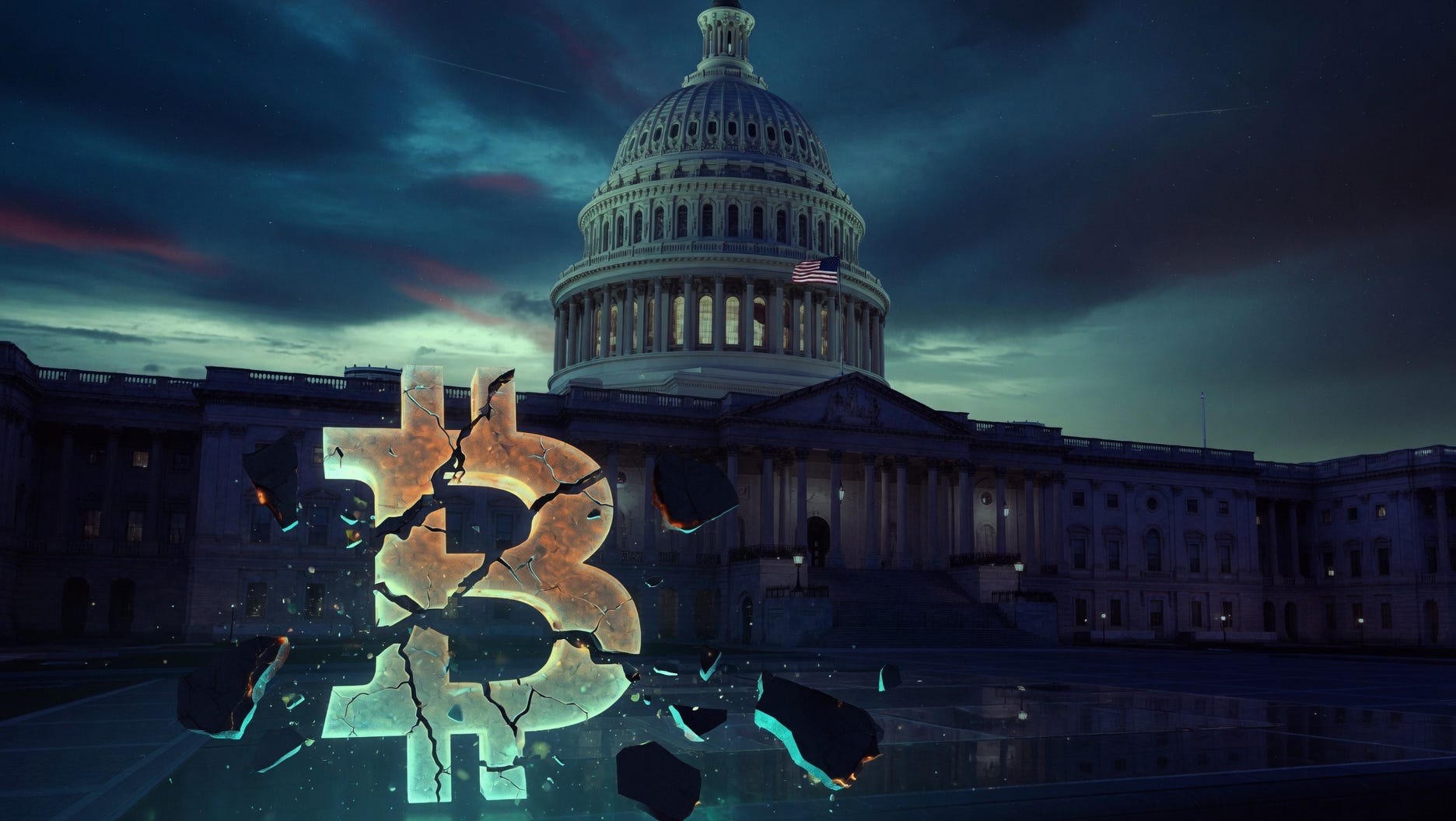
The Same Conference, Two Years Apart
In July 2024, Donald Trump stood at a Bitcoin conference in Nashville and promised a strategic Bitcoin reserve. The crowd rose. It was the loudest reception he had received from any audience that year. The moment was broadcast across every crypto channel on earth within minutes.
Last week, at the Bitcoin 2026 conference in Las Vegas, Patrick Witt, the executive director of the President’s Council of Advisors for Digital Assets, stood before another packed house and told the crowd a “breakthrough” was coming. A “big announcement” within weeks, he said. The executive branch was going to deliver it before Congress even acted.
Same conference series. Same energy. Same crowd.
If you followed the story closely, you already know what that crowd does not fully appreciate yet. Nothing has actually happened.

What the Order Said and What People Heard
On March 6, 2025, Trump signed an executive order establishing the Strategic Bitcoin Reserve and the United States Digital Asset Stockpile. David Sacks, the White House crypto czar, called it “like a digital Fort Knox for cryptocurrency.” Markets reacted. Bitcoin moved. Headlines ran across every financial outlet.
The actual text of the order was quieter than the announcement suggested.
The reserve would be capitalized with Bitcoin “already held by the Department of the Treasury that was finally forfeited as part of criminal or civil asset forfeiture proceedings.” The government was not going to buy Bitcoin. It was going to rename the Bitcoin it already had, centralize it under Treasury control, and stop selling it at auction.
The order created two hard deadlines. Agencies had 30 days to submit reports on their Bitcoin holdings, due April 5, 2025. Bessent had 60 days to evaluate legal and investment considerations and propose acquisition strategies, due around May 5, 2025.
Both deadlines passed. No public announcement came from any agency. No report was released. No strategy was published.
The White House did not acknowledge the silence.
The Officials Who Said One Thing
Between March and August 2025, Bo Hines, executive director of the President’s Working Group on Digital Assets, became the loudest voice for acquisition. He traveled the conference circuit. He testified before the Senate Banking Committee in June 2025 and said the administration wanted to acquire Bitcoin “as much as possible.” He repeated the line at every panel he spoke on. He said so publicly. He said so in closed-door industry meetings.
In late July 2025, the White House released its 168-page crypto policy report. The document had been positioned as the comprehensive roadmap for the administration’s digital asset agenda. It covered regulatory frameworks, stablecoin policy, and cross-agency coordination.
It said nothing about a Bitcoin acquisition plan.
On August 9, 2025, Bo Hines announced his resignation from the White House, effective immediately. He returned to the private sector. He gave no specific reason for the timing.
Five days later, on August 14, Treasury Secretary Scott Bessent appeared on Fox Business with Maria Bartiromo.
“We’re not going to be buying that,” Bessent said. “We are going to use confiscated assets and continue to build that up. We’re going to stop selling that.”
Bitcoin dropped more than 4% in the hour after those words aired. Later that day, Bessent posted a clarification on X saying Treasury remained “committed to exploring budget-neutral pathways to acquire more Bitcoin.” The phrase “budget-neutral pathways” has no operational definition. It has not been followed by any plan.
What the Reserve Actually Is
The United States government holds approximately 328,372 Bitcoin, making it the largest known sovereign Bitcoin holder on the planet. That figure is worth roughly $25 billion at current prices. It represents a significant portion of the total Bitcoin supply and a holding that no other government comes close to matching.
Every single coin came from a criminal seizure.
The holdings trace back to a collection of major enforcement actions accumulated over a decade. The Silk Road darknet marketplace. The 2016 Bitfinex hack, which yielded over 109,000 Bitcoin combined across multiple seizures from Ilya Lichtenstein and Heather Morgan. The October 2025 forfeiture from the Prince Group, a Cambodia-based pig-butchering scam operation led by former Chinese national Chen Zhi, which produced 127,271 Bitcoin in a single action and became the largest civil forfeiture in DOJ history.
The government did not accumulate this through strategy. It accumulated it through law enforcement. The executive order changed one material thing: it told agencies to stop auctioning what they had been selling for years.
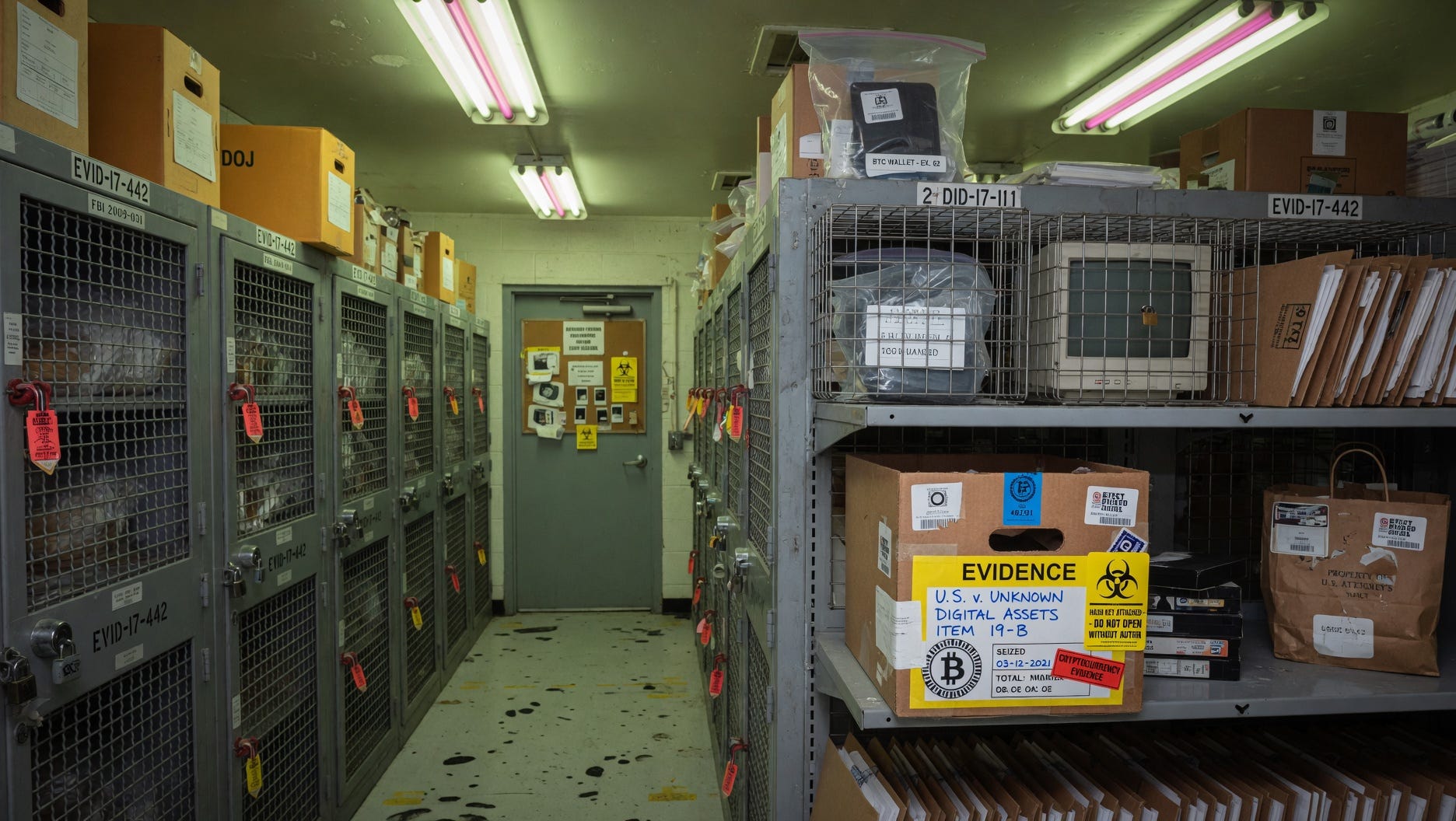
That is not a reserve. That is an evidence locker with a press release attached.
The government’s own reporting reflects this. A Freedom of Information Act request revealed the US Marshals Service, which manages custodied seizures, controls a fraction of what public blockchain analytics attribute to government wallets. The discrepancy exists because the government has never publicly disclosed which wallets it controls or confirmed the total across agencies. The reserve is not only not a purchase program. It is not even a fully transparent accounting of what exists.
The Legislation That Has Not Moved
Senator Cynthia Lummis introduced the BITCOIN Act on March 11, 2025, five days after the executive order, co-sponsored by five other senators: Jim Justice, Tommy Tuberville, Roger Marshall, Marsha Blackburn, and Bernie Moreno. The bill would direct Treasury to purchase 1 million Bitcoin over five years. It would fund the purchases partly by revaluing the Treasury’s gold certificates, which are currently booked at $42.22 per ounce despite gold trading well above $3,000. The accounting surplus would theoretically finance the purchases without new appropriations. All Bitcoin acquired through the program would be required to be held for a minimum of 20 years.
As of today, the BITCOIN Act has been in the first stage of the legislative process since the day it was introduced. It has not cleared committee. It has not received a floor vote. It has not advanced in any form.
Last week in Las Vegas, Representative Nick Begich announced that a House companion bill will be reintroduced in the coming weeks under a new name: the American Reserves Modernization Act. He said the legislation needs to move now, before a different administration can revisit the policy. He framed urgency as the argument.
The urgency was always real. The time to codify it was fourteen months ago.
The Legal Trap
An executive order cannot authorize new federal spending. It cannot compel the Treasury to purchase assets on the open market. It cannot establish custody infrastructure funded by appropriations. It cannot bind a future administration.
Matthew Pinnock, chief operating officer at Altura DeFi, put it plainly after Witt’s conference remarks: “The executive branch lacks the authority to buy Bitcoin on the open market without congressional appropriation. Any new spending requires congressional appropriation, and executive orders carry no legislative weight. The next administration can reverse them on day one with a stroke of a pen.”
Bessent confirmed the same boundary before Congress in February 2026. Asked directly by Representative Brad Sherman whether Treasury or the Federal Open Market Committee could use public funds to support Bitcoin prices or direct banks to purchase Bitcoin, Bessent said: “I am secretary of the Treasury. I do not have the authority to do that.”
That testimony came from the same administration that spent six months saying it wanted to buy as much Bitcoin as possible.
The reserve as it exists today is a policy that can be erased by whoever wins in 2028. The Bitcoin would remain in government custody. The mandate to hold it would not. A new administration could authorize sales under existing forfeiture disposal law, liquidate the entire position, and use the proceeds for general appropriations. The executive order would not stop them.
This is the exact reason Begich’s framing at the conference is correct and insufficient at the same time. He is right that the gains need to be locked in. He is describing a problem his party has had 14 months to solve and has not solved.
What Germany Did
Germany held approximately 50,000 Bitcoin seized from a piracy website. In July 2024, the German government sold the entire position at roughly $58,000 per Bitcoin, generating approximately $2.9 billion in proceeds.
Within four months, Bitcoin crossed $100,000. Germany left more than $2 billion on the table by selling assets it could have held.
The United States looked at that outcome and chose a different path. The decision not to sell is the correct one. Holding 328,000 Bitcoin is materially better than selling it.
But it is worth being precise about what “holding” actually means. Germany was not running a reserve program. It was managing evidence. It sold its evidence at the wrong time. The United States is currently holding its evidence and calling it strategy.
The distinction matters because the case for a true reserve, one built on deliberate acquisition, long-term legislation, and defined strategic purpose, is stronger than the case for an evidence locker. The current arrangement uses the language of the stronger case while delivering the weaker one.
What the Announcement Can Actually Contain
Patrick Witt’s “big announcement” is coming. He was specific about the timeline. It will arrive within weeks, he said, and will be something the executive branch can deliver without waiting for Congress.
Given the legal constraints, the ceiling of what any executive action can contain is narrow. The White House can clarify custodial procedures for seized Bitcoin across agencies. It can formalize reporting mechanisms. It can issue guidance on how agencies transfer Bitcoin to Treasury. It can announce that the reserve has been formally accounted for and consolidated.
None of those actions involve purchasing Bitcoin. None of them make the reserve permanent. None of them prevent the next administration from reversing course.
It is also worth noting where this announcement is being promised. The Bitcoin conference series is where Trump made his original reserve commitment in 2024. That promise was delivered to the same crowd, at the same annual event, with the same energy. What followed was an executive order whose deadlines passed without public acknowledgment, an official who championed acquisition and then resigned, and a Treasury Secretary who publicly ruled out purchases on national television.
The conference has become the place where the reserve gets promised and the rest of the year is where nothing happens.
The Broader Pattern
I have written about how the GENIUS Act created a stablecoin framework that looks like progress while leaving the deeper structural questions about who controls monetary infrastructure untouched. I have written about the petrodollar and how financial systems are built on the gap between what governments announce and what governments do. The Bitcoin reserve sits in that same gap.
The announcement of a reserve generated real market effects. Bitcoin moved on the news. The policy of holding rather than selling removed meaningful sell pressure from the market. The optics of the United States becoming the world’s largest sovereign Bitcoin holder matter for institutional perception and for the asset’s long-term legitimacy.
But optics are not policy. A reserve that exists by executive order, built on seizures, managed by officials who cannot agree on what it means, and vulnerable to erasure on inauguration day is not a strategic reserve. It is a posture.
The question of who created Bitcoin I covered earlier this year asked who built the infrastructure that made this asset possible. The strategic reserve question asks something different: who controls what Bitcoin becomes at the national level, and whether the people making that decision are operating with genuine strategic intent or performing it.
The evidence so far points toward performance.
The Bitcoin is real. The holdings are real. The potential is real. The reserve, as a durable institutional structure with legislative backing and a defined acquisition mandate, does not yet exist.
Witt’s announcement will arrive. It will generate coverage. The same crowd will respond with enthusiasm. And then the calendar will turn and the BITCOIN Act will still be sitting in the first stage of Congress, where it has been since March 2025.

If Congress fails to pass the BITCOIN Act before 2028, does the entire concept of a reserve collapse? Or does the government hold the Bitcoin regardless of what the next president does?
If this read the way you hoped the mainstream coverage would read it, share it with someone who only saw the headlines.
This publication does not take institutional money and does not run ads. If you want more of this, a paid subscription is the most direct way to make it possible.
Strident Citizen is independent and reader funded. No ads. No institutional backing. Every article is free to read. If this kind of investigative journalism matters to you, a paid subscription is the most direct way to keep it going.