


On Saturday, February 28, 2026, U.S. and Israeli forces launched strikes on Iran that killed Supreme Leader Ayatollah Ali Khamenei and triggered the broadest Middle Eastern military conflict in decades. Bitcoin fell to $63,000. Then it came back.
That sequence, dip, recover, outperform equities, is the story. Not just of a weekend, but of what crypto actually does when the world genuinely breaks. And if you want to understand what Bitcoin is really for, not the trading narratives or the ETF flows or the halving cycle predictions, but the actual foundational purpose of a permissionless monetary network, this weekend handed you the clearest case study in the asset’s history.
The Dip Everyone’s Misreading
Peter Schiff was first in the comments, obviously. Gold surged past $5,400 an ounce. Bitcoin dropped 4% to $63,000. His read: the “digital gold” narrative died on a runway in Tehran.
Here’s what he left out.
Bitcoin was the only major liquid asset trading when the strikes hit on Saturday afternoon. Equities, bonds, and oil futures had no outlet until Sunday evening or Monday’s open. Bitcoin absorbed the entire first shock in real time and it absorbed it with a 4% drawdown. Every unit of fear, uncertainty and panic that hit global markets on Saturday afternoon went through one instrument. That instrument moved 4% and then bounced. Bitcoin had already recovered before equities even opened, and by the time Wall Street’s Monday session began, the panic had passed and BTC had clawed back toward $67,000 to $69,000.
“Bitcoin’s initial sell-off was almost textbook; markets hate uncertainty more than bad news, and the moment the Iran conflict looked contained, the reflexive bid came back fast,” said Ryan McMillin, chief investment officer at Merkle Tree Capital.
Bitcoin tends to absorb the first wave of geopolitical selling because it’s the only large liquid asset that trades on a Saturday afternoon. Equities, oil, and bonds don’t have that option until Sunday evening futures or Monday’s open. This is structural, not incidental. Bitcoin’s 24/7 market isn’t a quirk of crypto culture. It’s a fundamental design feature that means it serves as the world’s only real-time fear gauge across every timezone, every day of the week, including the ones when wars start.
This is the mechanism the critics keep ignoring. Bitcoin isn’t losing to gold. It’s playing a different game, one that runs 24/7, in every jurisdiction, with no circuit breakers, no market halts, and no authority capable of suspending trading when the news gets bad enough.
Gold is the established safe haven of the institutional world. That’s not a knock on Bitcoin, it’s just an accurate description of where we are in adoption. Spot Bitcoin ETFs only launched in early 2024. The reflexive crisis response of “sell risk, buy gold” is decades deep in institutional muscle memory. That changes at the margin with every event like this, and this weekend moved the margin.
700% — The Number That Changes the Argument
While Western traders were debating Bitcoin’s safe-haven credentials, something far more significant was happening inside Iran.
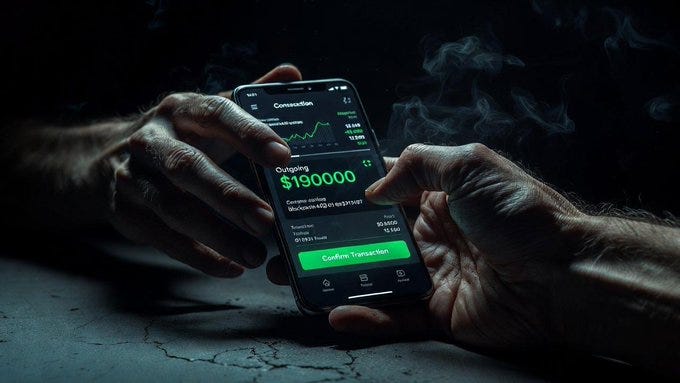
Outgoing crypto transactions from Iranian exchange Nobitex surged 700% within minutes of the initial strikes at the weekend, according to blockchain analytics firm Elliptic. Funds appear to be moving to overseas exchanges, potentially bypassing banking controls.
Let that land. Within minutes. Not hours. Not days. Minutes after bombs fell on Tehran, 11 million Nobitex users were moving their money, to wallets that no government, not even their own, can freeze.
This is not an abstract ideological point about financial freedom. These are real people, in a country under military attack, whose first instinct was to reach for a borderless monetary network because they understood, instinctively, that it was the one financial tool that couldn’t be taken from them in that moment. The rial had already lost over 96% of its value against the dollar. The banking system was compromised by sanctions. The government had a history of internet shutdowns during civil unrest. And yet the Bitcoin network was there, processing transactions, indifferent to the geopolitics above it.
As of March 2, Chainalysis reported that several Iranian exchanges, including Nobitex and Ramzinex, had gone offline. This may be due to government-ordered internet shutdowns or infrastructure damage from the bombings.
The exchanges went dark. The Bitcoin network did not.
That is the test. That is what passed.
Iran’s $7.8 Billion Shadow Economy — And Why It Matters Now
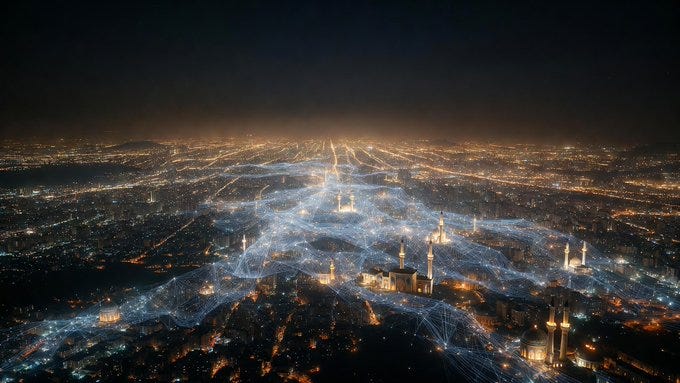
This didn’t start on February 28. Iran has been building a parallel crypto-denominated economy for years, and the scale of it is only now getting the attention it deserves.
Blockchain analytics firm Chainalysis found that Iran’s crypto ecosystem reached $7.78 billion in 2025, growing faster than the year before. That figure is as large as the GDP of some smaller countries such as the Maldives, or Liechtenstein. It is not a fringe workaround. It is infrastructure, and it has been treated as such by the Iranian state for the better part of a decade.
Iran legalized crypto mining in 2019, allowing licensed operators to use subsidized electricity in exchange for selling mined BTC to the central bank. The Islamic Revolutionary Guard Corps deepened its footprint from there, and Chainalysis estimates IRGC-linked addresses accounted for more than 50% of total Iranian crypto inflows in the fourth quarter of 2025, with over $3 billion in value received last year. Those figures reflect only wallets publicly tied to sanctions listings, meaning the true scale is almost certainly larger.
The state used Bitcoin to survive sanctions. Its citizens used Bitcoin to survive the state. Same asset. Opposite motivations. Both groups validated the same underlying proposition: that a permissionless, borderless monetary network has real utility when conventional finance fails.
Critics dismiss this as “criminals using crypto.” The 11 million ordinary Iranians who withdrew their savings in the minutes after Khamenei was killed might frame it differently. For them this was not ideology. It was survival.
And none of this was improvised. Iran built the infrastructure for this moment over years, including one of the most extraordinary Bitcoin mining operations on the planet.
The Most Profitable Bitcoin Operation on Earth — And What the Bombs Did to It
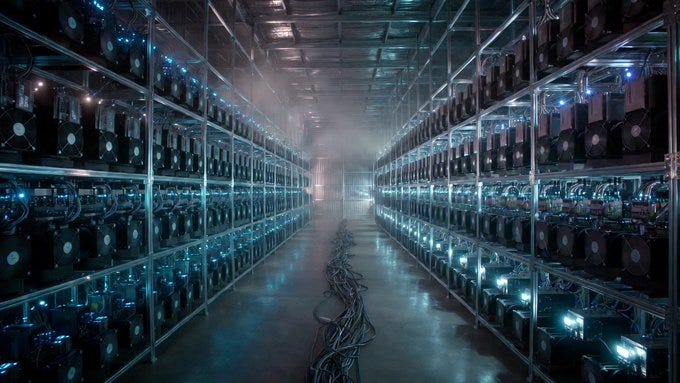
Here is the number that should stop every Bitcoin sceptic mid-sentence: it costs $1,320 to mine one Bitcoin in Iran.
Not $40,000, the U.S. average. Not $102,000, which is what American miners in high-cost states are spending per coin. Not $306,000, which is what it costs in Italy. One thousand, three hundred and twenty dollars. At Iran’s industrial rate of $0.002 per kWh — the result of state subsidies tied to the country’s vast natural gas reserves — the energy cost to mine one Bitcoin comes to roughly $1,320. At a Bitcoin price of $68,000, that’s a 50x gross margin. At last year’s peak of $124,000, it was closer to 93x.
To put that in perspective: an Antminer S21 running at Iranian electricity rates generates roughly $6 in profit per day after the halving. The same machine in Germany runs at a loss. The same machine in Italy runs at a catastrophic loss. Iran turned its energy subsidies into the most profitable Bitcoin mining jurisdiction on earth, and then used that advantage to build a financial lifeline that its own sanctions-choked banking system could never have provided.
This is not a grey market curiosity. It is a structured state programme. Iran officially legalized Bitcoin mining in 2019 as a way to earn foreign currency during international sanctions. Licensed miners can operate legally and access subsidized electricity, but they are required to sell their mined Bitcoin directly to the Central Bank of Iran, which uses it to help pay for imports and bypass global banking restrictions. In practice, the state was running a conversion engine: take cheap domestic energy, turn it into internationally liquid hard currency, route it through the blockchain instead of SWIFT.
The IRGC extended this further into stablecoins. According to Elliptic, Iran’s central bank accumulated at least $507 million in USDT in 2025. In sanctioned environments, USDT functions as a shadow dollar, the price stability of the U.S. currency without the U.S. banking system attached to it. Iran was effectively holding dollars it was legally prohibited from holding, through a stablecoin, on a blockchain, settled on Tron for the low fees. The ingenuity of it is remarkable even if the purpose is not.
But the licensed programme is only part of the story. Experts say that up to 90% of mining in Iran may happen underground. Illegal miners often connect to residential power lines or unauthorised grid sources to keep costs even lower. While profits can be enormous, crackdowns are common and authorities frequently seize equipment. Large-scale mining has also contributed to blackouts in Iranian cities, as the draw on the grid outpaces supply. There is a grim irony in ordinary Iranians sitting in the dark while the regime mines Bitcoin on subsidised electricity a few streets away.
So what happened to all of this when the bombs fell?
Social media erupted with warnings of a catastrophic supply shock. One widely circulated post on X claimed that if the Iranian regime collapsed, “billions in BTC get dumped or lost forever, 5% of global hashrate disappears overnight, 427,000 rigs go dark.” The framing was dramatic and, as it turned out, wrong.
According to data from CoinWarz, Bitcoin’s hashrate was around 986 EH/s in the immediate aftermath of the first U.S.-Israeli attacks, and rose to highs of 1,136 EH/s on March 1 before dipping slightly Tuesday morning. The network didn’t contract. It set new records in the 24 hours after war began.
Ethan Vera, COO of Luxor Technology, confirmed that Iran contributes below 1% of global hashrate, and said that “if there is an interruption there will be no material impact to block times, and zero impact to the security of the Bitcoin network.”
The social media FUD got the mechanism backwards. Iran’s mining industry, for all its scale in dollar terms, was never structurally critical to the Bitcoin network. The network is specifically designed so that no single geography can hold it hostage, and this weekend proved it, empirically, under live fire.
The QCP Playbook: We’ve Seen This Before
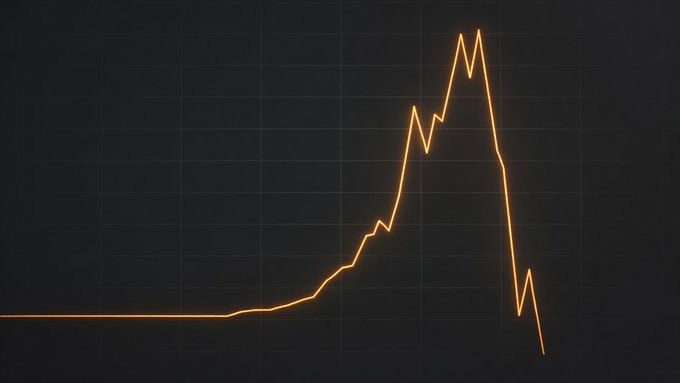
The geopolitical escalation triggered $300 million in long position liquidations, with QCP Capital characterizing this as a contained selloff compared to the $2.5 billion in leveraged longs wiped out during early February.
Three hundred million dollars in liquidations sounds alarming. In context, it’s a controlled washout of overleveraged positions against a backdrop of genuine war. The derivatives market held structure. There was no cascade, no systemic contagion, no exchange going dark under the weight of forced selling. The market absorbed a war and kept moving.
More importantly, QCP drew the direct historical comparison:
“If we recall the previous US strike on Iran last June (also a weekend), BTC broke below $100K as the news broke only to trade back above on Monday, and subsequently rallied to a high of $123K a few weeks later,” QCP Capital noted, adding that “the conflict is still in its early stages.”
The June 2025 setup and this one rhyme closely: weekend strike, immediate dip, rapid recovery, options market positioning for upside. Last time that pattern resolved to $123,000. QCP analysts observed that “while the scale of this attack is far greater than last year’s, price action could be hinting at early signs of history repeating itself.”
Options traders loaded up on upside contracts expiring March 27, 2026, targeting the $74,000 and $75,000 strike prices in anticipation of a March rebound. Thousands of contracts were traded across those strikes in a single session, the kind of positioning that reflects deliberate conviction, not panic buying.
The smart money is not running from this event. It’s buying the dip, referencing the playbook, and watching oil prices for inflation signals that would complicate the Fed’s hand. That is a very different posture from the one the headlines would suggest.
What Actually Got Proven This Weekend
Let’s be precise about the claims.
Bitcoin is not digital gold, yet. Gold’s 2%+ surge versus Bitcoin’s initial dip shows that in a genuine acute fear event, institutional capital still defaults to the metal. This is a market maturity issue, not a fundamental one. Spot Bitcoin ETFs only launched in early 2024. The reflexive association of crisis and buying gold is decades-deep. That changes at the margin with every event like this.
Bitcoin is a 24/7 geopolitical barometer. It price-discovered the Iran conflict hours before equity markets could react. If you held Bitcoin over the weekend, you had real-time information about market sentiment that equity holders couldn’t access until Monday. That is a feature, not a flaw.
Bitcoin outperformed equities on the recovery. By the metrics that matter for medium-term holders, speed of recovery and comparative drawdown, Bitcoin held up better than the stock market in this event. It fell first, recovered first, and was back near its weekly range before Wall Street had even processed what happened.
Crypto is essential infrastructure for people under sanctions. The 700% outflow spike from Nobitex is not a bug in the system. It is the system working exactly as designed. Billions of people live under financial repression. This weekend proved, again, that they have an exit.
Decentralised networks have no off switch. Governments can shut down centralised exchanges. They cannot shut down Bitcoin. This distinction will matter more, not less, as geopolitical instability continues.
The Bigger Picture: Arthur Hayes Was Right About the Mechanism
Arthur Hayes has argued that “the longer Trump engages in the extremely costly activity of Iranian nation-building, the higher the likelihood that the Fed lowers the price and increases the quantity of money,” which he frames as ultimately bullish for Bitcoin.
War is expensive. War funded by deficit spending is inflationary. Inflation erodes fiat. Bitcoin is capped at 21 million. That macro argument just got stronger this morning: a March Fed rate cut is now effectively off the table, with hotter-than-expected PPI data, higher oil prices from the conflict, and reaccelerating manufacturing activity all cited as factors. The inflationary pressure the Hayes thesis requires is already building, and it is building faster than the Fed anticipated.
Institutional money appears to be reading the same playbook. Abu Dhabi’s Mubadala Investment Company and Al Warda Investments disclosed in mid-February that they had continued adding spot Bitcoin ETF exposure throughout Q4 2025, and on-chain data shows whales treating this weekend’s dip as an accumulation zone rather than an exit. As of this morning, BTC is trading at $68,214, up 8% from its conflict low near $63,000. The people with the most information and the most capital are buying. That matters.
The test Bitcoin passed this weekend wasn’t “did it go up when bombs dropped.” The test was: did the network function, did people use it when they needed it most, and did it recover faster than the systems it’s meant to replace?
On all three counts: yes.
The geopolitical attack on Bitcoin isn't only happening through price manipulation and sanctions. Russian intelligence found a more direct route. The DarkSword iOS exploit is the story most crypto holders missed.
If this analysis was useful, share it with one person who’d find it interesting. Independent crypto writing lives or dies by word of mouth — it’s the most valuable thing you can do.
If you’re not subscribed yet, hit the button below. More analysis like this, every time something important happens.
What’s your read? Gold won the weekend on the safe-haven trade — but does this weekend change the long-term digital gold argument for you, or does gold still win in a genuine crisis? Let me know in the comments.
All price data sourced from Binance and CoinGecko. On-chain analytics sourced from Elliptic, Chainalysis, and Arkham Intelligence. QCP Capital commentary via their March 2, 2026 market note. This article is not financial advice.
Further Reading
Iran Is Using a $7.8 Billion Crypto Shadow Economy to Bypass Global Sanctions CoinDesk, February 28, 2026 The most comprehensive breakdown of Iran’s crypto infrastructure, the mining programme, IRGC wallet activity, and the stablecoin strategy. Essential context for everything in this article. https://www.coindesk.com/business/2026/02/28/iran-conflict-throws-the-regime-s-usd7-8-billion-crypto-ecosystem-and-bitcoin-mining-network-into-spotlight
Iran’s Crypto Economy in 2025: Declining Volumes, Rising Tensions, and Shifting Trust TRM Labs The most technically rigorous on-chain analysis available, covering the Nobitex hack, Tether’s $37M freeze of Iranian wallets, and how Iran adapted its stablecoin routing after enforcement crackdowns. Goes deeper than anything else out there. https://www.trmlabs.com/resources/blog/irans-crypto-economy-in-2025-declining-volumes-rising-tensions-and-shifting-trust